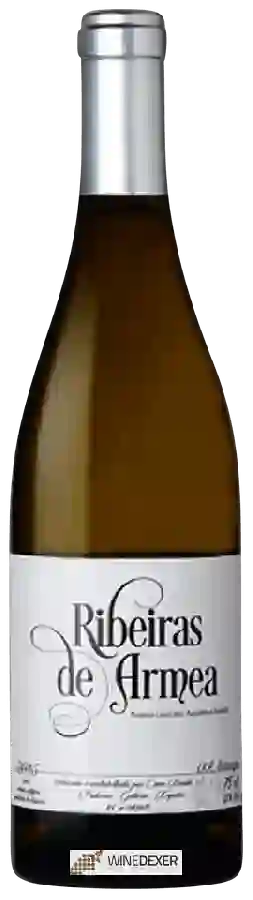
Winery Casa BeadeRibeiras de Armea Lexítimo Branco
 White wine



This wine generally goes well with
The Ribeiras de Armea Lexítimo Branco of the Winery Casa Beade is in the top 5 of wines of Betanzos.
Wine flavors and olphactive analysis


On the nose the Ribeiras de Armea Lexítimo Branco of Winery Casa Beade in the region of Galice often reveals types of flavors of earth, tree fruit or citrus fruit.
Details and technical informations about Winery Casa Beade's Ribeiras de Armea Lexítimo Branco.
Discover the grape variety: Penouille
An ancient grape variety from the southwest of France that used to be found in the Bordeaux region and in the vineyards of Fronton (Haute Garonne). Today, it is in the process of disappearing.
Last vintages of this wine
The best vintages of Ribeiras de Armea Lexítimo Branco from Winery Casa Beade are 2015, 2016, 2014, 0
Informations about the Winery Casa Beade
The Winery Casa Beade is one of of the world's greatest estates. It offers 3 wines for sale in the of Betanzos to come and discover on site or to buy online.

The wine region of Betanzos
The wine region of Betanzos is located in the region of Galice of Spain. Wineries and vineyards like the Domaine Casa Beade or the Domaine Conexión Mandeo produce mainly wines white. On the nose of Betanzos often reveals types of flavors of earth, tree fruit or citrus fruit. We currently count 3 estates and châteaux in the of Betanzos, producing 3 different wines in conventional, organic and biodynamic agriculture.
The wine region of Galice
Galicia is one of the 17 first-level administrative regions (called comunidades autónomas) of Spain. It occupies the northwestern corner of the Iberian Peninsula, and is exposed on two sides to the Atlantic Ocean. To the South is Portugal, to the east Castilla y Leon. Viticulture has a Long tradition in Galicia, introduced to the region by the ancient Romans and continued by monks throughout the Middle Ages.
The word of the wine: Heavy
Said of a thick, rustic wine that lacks finesse.