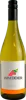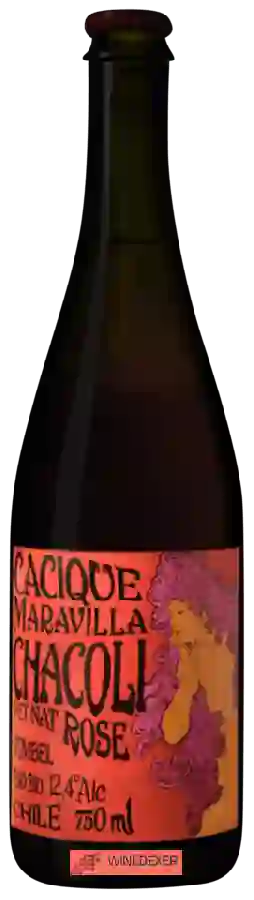
Winery Cacique MaravillaChacoli Petnet Yumbel Rose
 Sparkling wine



This wine generally goes well with

Details and technical informations about Winery Cacique Maravilla's Chacoli Petnet Yumbel Rose.
Discover the grape variety: Brustiano
Lively and fresh dry whites with a pale golden robe, a lean palate with preserved acidity, showing signature aromas of citrus (lemon, grapefruit), white flowers, white-fleshed fruits and iodine Mediterranean notes. Thirst-quenching insular profile best drunk young. Preserved for its heritage value, it occasionally features in Corsican blends and is subject to conservation plantings under the CRVI. Native white Corsican grape.
Last vintages of this wine
The best vintages of Chacoli Petnet Yumbel Rose from Winery Cacique Maravilla are 2020, 2019, 0
Informations about the Winery Cacique Maravilla
The Winery Cacique Maravilla is one of of the world's greatest estates. It offers 12 wines for sale in the of Bio-Bio Valley to come and discover on site or to buy online.

The wine region of Bio-Bio Valley
Southernmost valley of continental Chile, the coolest and most humid thanks to the Pacific. Pinot Noir signature as star red (~40% planted): fine and airy with notes of red cherry, raspberry, wild strawberry, undergrowth, dried flowers and a volcanic smoky touch, fine tannins. Taut Chardonnay (green apple, citrus, white flowers), zippy herbal Sauvignon Blanc, vibrant Riesling. Historic cradle of País and Muscat of Alexandria on volcanic soils.
The wine region of South
Southern Australia regional zone (18 GIs including Barossa, McLaren Vale, Coonawarra, Clare, Adelaide Hills). Shiraz leads in powerful, solar reds of blackberry, plum, pepper, dark chocolate and a balsamic-spicy touch, fleshy tannins and long ageing. Firm Cabernet Sauvignon and supple Grenache as GSM blend partners. Dry, mineral Clare Riesling as the white pinnacle.
The word of the wine: Malolactic fermentation
Called second fermentation or malo for short. It is the degradation (under the effect of bacteria) of the malic acid naturally present in the wine into milder, less aggressive lactic acid. Some producers or wineries refuse this operation by "blocking the malo" (by cold and adding SO2) to keep a maximum of acidity which carries the aromas and accentuates the sensation of freshness.