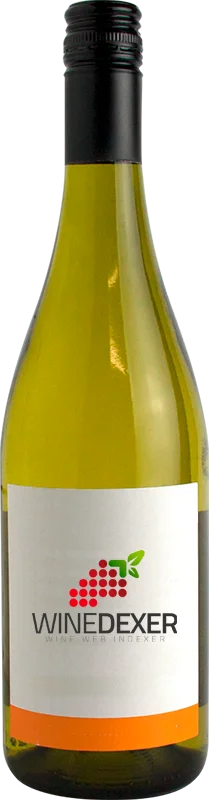
Winery BusbyPinot Grigio
 White wine


In the mouth this white wine is a .
This wine generally goes well with pork, cured meat or mushrooms.
Taste structure of the Pinot Grigio from the Winery Busby
Light | Bold | |
Dry | Sweet | |
Soft | Acidic |
In the mouth the Pinot Grigio of Winery Busby in the region of Australie du Sud-Est is a .
Food and wine pairings with Pinot Grigio
Pairings that work perfectly with Pinot Grigio


Original food and wine pairings with Pinot Grigio

The Pinot Grigio of Winery Busby matches generally quite well with dishes of pork, spicy food or mushrooms such as recipes of chinchards with white wine and grapes, monkfish (anglerfish) à la sétoise or pork tenderloin with vegetables in a pressure cooker.
Details and technical informations about Winery Busby's Pinot Grigio.
Discover the grape variety: Nero
An interspecific cross between Merlot Noir or Medoc Noir x Perle de Csaba and Villard Blanc x Gardonyi Geza, obtained in Hungary in 1965 by Josef Csizmazia. It can be found in the Netherlands, Belgium, Switzerland, Germany, Hungary, Poland, etc. In France, it is practically unknown. It should not be confused with two Italian grape varieties, the nero d'Avola and the nero di troia or uva di troia. Note that it is an ideal variety for amateur gardeners for the simple fact that it does not fear the main cryptogamic diseases such as mildew and oidium, to have an early maturity and moreover its grape is very tasty.
Last vintages of this wine

The best vintages of Pinot Grigio from Winery Busby are 0, 2012
Informations about the Winery Busby
The Winery Busby is one of of the world's greatest estates. It offers 9 wines for sale in the of Australie du Sud-Est to come and discover on site or to buy online.

The wine region of Australie du Sud-Est
South East Australia is a geographical indication (GI) covering the entire south-eastern third of Australia. The western boundary of this area extends 2,000 kilometres (1,250 miles) across the Australian continent from the Pacific coast of Queensland to the Southern Ocean coast of South Australia. This vast wine 'super zone' effectively encompasses all the major Australian wine regions outside Western Australia. Rainforest, mountain ranges, scrubland, desert and Dry riverbeds occupy the majority of the land in the South East Australian area.
The word of the wine: Gross
Champagne with between 6 and 15 grams of sugar (see dosage liqueur).