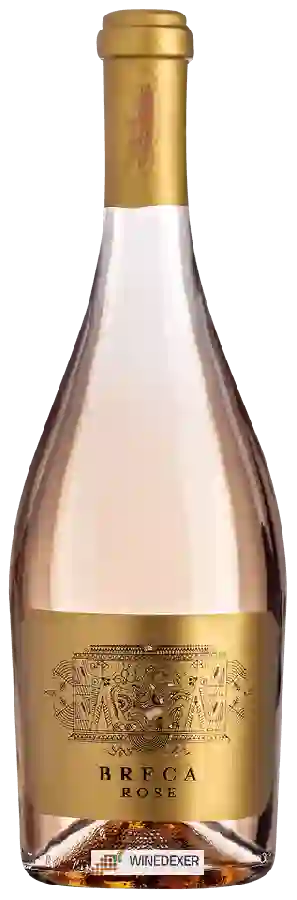
Winery BrecaRosé
 Pink wine



This wine generally goes well with beef and mature and hard cheese.

Wine flavors and olphactive analysis






On the nose the Rosé of Winery Breca in the region of Aragon often reveals types of flavors of non oak, earth or vegetal and sometimes also flavors of oak, tree fruit or spices.
Food and wine pairings with Rosé
Pairings that work perfectly with Rosé


Original food and wine pairings with Rosé
The Rosé of Winery Breca matches generally quite well with dishes of beef or mature and hard cheese such as recipes of tournedos with foie gras or tomato, ham, cheese and mushroom pie.
Details and technical informations about Winery Breca's Rosé.
Discover the grape variety: St. Laurent
Structured and elegant reds with a deep ruby colour, soft to firm tannins and silky palate, with signature aromas of red fruit (cherry, raspberry), morello cherry (hallmark), sweet spices, undergrowth and floral notes reminiscent of Pinot Noir. Fine ageing potential. Star of the great reds of the Austrian Burgenland, also grown in the Czech Republic. The German synonym for Saint Laurent, an indigenous Austrian black variety genetically related to Pinot Noir.
Last vintages of this wine
The best vintages of Rosé from Winery Breca are 2020, 2018, 0, 2019 and 2017.
Informations about the Winery Breca
The Winery Breca is one of of the world's greatest estates. It offers 16 wines for sale in the of Aragon to come and discover on site or to buy online.

The wine region of Aragon
Autonomous community of northeast Spain, historic kingdom of Iberian red Grenache (~75%). Signature Garnacha: generous and sun-drenched with signature ripe cherry, crushed strawberry, garrigue, kirsch, sweet spice and a balsamic touch, round tannins and a warm, alcoholic palate. 4 major DOs: Cariñena the largest (old vines), Calatayud high-altitude, Campo de Borja and Somontano at the Pyrenean foothills. Fresh Macabeo and Garnacha blanca whites.
The word of the wine: Vatting
After five to eight days of alcoholic fermentation, it is possible to prolong the maceration in order to extract the maximum amount of matter from the marc. The wines obtained in this way are rich and full-bodied, and in principle are intended for laying down.


