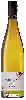
Winery Borell DiehlJean Borell Weißwein Trocken
 White wine
In the mouth this white wine is a with a nice freshness.
This wine generally goes well with vegetarian, shellfish or goat cheese.

Taste structure of the Jean Borell Weißwein Trocken from the Winery Borell Diehl
Light | Bold | |
Dry | Sweet | |
Soft | Acidic |
In the mouth the Jean Borell Weißwein Trocken of Winery Borell Diehl in the region of Pfalz is a with a nice freshness.
Food and wine pairings with Jean Borell Weißwein Trocken
Pairings that work perfectly with Jean Borell Weißwein Trocken


Original food and wine pairings with Jean Borell Weißwein Trocken
The Jean Borell Weißwein Trocken of Winery Borell Diehl matches generally quite well with dishes of shellfish, vegetarian or goat cheese such as recipes of knife feet, magic cake cheese quiche or pan-fried courgette, tomatoes and goat's cheese.
Details and technical informations about Winery Borell Diehl's Jean Borell Weißwein Trocken.
Discover the grape variety: Saint Pépin
Aromatic, fruity whites with a pale golden robe, a supple palate with preserved acidity, featuring aromas of white flowers, white-fleshed fruits (apple, pear) and light muscat notes. Extremely cold-hardy. Grown in the northern United States (Minnesota, Wisconsin) and Canada for rigorous continental viticultural climates. American white hybrid variety obtained in 1987 by Elmer Swenson in Minnesota.
Informations about the Winery Borell Diehl
The Winery Borell Diehl is one of of the world's great estates. It offers 89 wines for sale in the of Pfalz to come and discover on site or to buy online.

The wine region of Pfalz
Fleshy, dry, fruity Riesling is the region's signature: yellow peach, apricot, ripe citrus, lovely mineral tension. Germany's largest red-wine area (40%), with silky Spätburgunder showing red fruit and spice, darker structured Dornfelder, supple Portugieser. Some rounded Pinot Blanc and Pinot Gris. A 23,640 ha vineyard along the Haardt, among Germany's warmest (>2,000 h of sun).
The word of the wine: Sorting
Action which consists in removing the bad grains, not ripe or affected by the rot. We often use vibrating sorting tables which, by shaking, make the impurities fall to the ground. In the case of sweet wines, we speak of harvesting by successive selections, in several passages, to select the very ripe grapes each time.