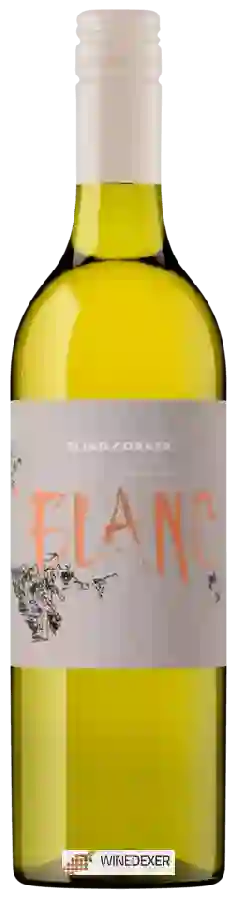
Winery Blind CornerBlanc
 White wine



This wine generally goes well with fruity desserts, vegetarian or lean fish.

Wine flavors and olphactive analysis


On the nose the Blanc of Winery Blind Corner in the region of Australie de l'Ouest often reveals types of flavors of earth, vegetal or tree fruit and sometimes also flavors of citrus fruit, tropical fruit.
Food and wine pairings with Blanc
Pairings that work perfectly with Blanc



Original food and wine pairings with Blanc


The Blanc of Winery Blind Corner matches generally quite well with dishes of rich fish (salmon, tuna etc), shellfish or vegetarian such as recipes of irish tartiflette, pike quenelles with lobster bisque sauce or cream and tuna quiche.
Details and technical informations about Winery Blind Corner's Blanc.
Discover the grape variety: Chenin blanc
Chameleon whites with taut acidity, ranging from mineral dry (Savennières, Vouvray sec) to off-dry and medium-sweet (Vouvray, Montlouis), sumptuous botrytised sweet (Quarts-de-Chaume, Bonnezeaux, Coteaux du Layon) and brilliant sparkling (Crémant de Loire, Vouvray brut). Aromas of quince, apple, honey, white flowers, beeswax and flint. An Anjou variety, also star of South Africa's Western Cape.
Last vintages of this wine
The best vintages of Blanc from Winery Blind Corner are 2020, 2019, 2018, 0 and 2017.
Informations about the Winery Blind Corner
The Winery Blind Corner is one of of the world's greatest estates. It offers 20 wines for sale in the of Australie de l'Ouest to come and discover on site or to buy online.

The wine region of Australie de l'Ouest
Australian premium on Margaret River. Signature Bordeaux Cabernet-Merlot blends in red: deep and refined with notes of ripe blackcurrant, eucalyptus, cedar and graphite, firm tannins and great ageing, often compared to Médoc. Chardonnay rated Australia's best: taut, saline and mineral (lemon, hazelnut, brioche). Lively Sauvignon-Sémillon (citrus, cut grass).
The word of the wine: Liquid
Sweet wine containing more than 50 grams of residual sugar per liter. Sweet wines are made from grapes often affected by botrytis cinerea and concentrated either by passerillage (drying of the grapes on the vine stock), or after the harvest (straw wines), or by the cold (ice wines).