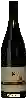
Winery BertaGrappa di Nero d'Avola
 Sweet wine


In the mouth this sweet wine is a powerful with a nice balance between acidity and tannins.
This wine generally goes well with poultry, beef or game (deer, venison).

Taste structure of the Grappa di Nero d'Avola from the Winery Berta
Light | Bold | |
Smooth | Tannic | |
Dry | Sweet | |
Soft | Acidic |
In the mouth the Grappa di Nero d'Avola of Winery Berta in the region of Piedmont is a powerful with a nice balance between acidity and tannins.


Food and wine pairings with Grappa di Nero d'Avola
Pairings that work perfectly with Grappa di Nero d'Avola



Original food and wine pairings with Grappa di Nero d'Avola

The Grappa di Nero d'Avola of Winery Berta matches generally quite well with dishes of beef, lamb or game (deer, venison) such as recipes of beef pot-au-feu, lamb kebab or duck leg confit in cider.
Details and technical informations about Winery Berta's Grappa di Nero d'Avola.
Discover the grape variety: Nero d'Avola
Full-bodied, warm reds with deep colour and generous alcohol, with aromas of blackberry, black cherry jam, plum, liquorice, chocolate and Mediterranean spice. Ripe tannins and a broad, sunny finish. The star of Sicily (Nero d'Avola Sicilia DOC, Cerasuolo di Vittoria DOCG blended with Frappato, Eloro DOC). Native Sicilian variety, also called Calabrese, the most planted on the island.
Last vintages of this wine
The best vintages of Grappa di Nero d'Avola from Winery Berta are 0
Informations about the Winery Berta
The Winery Berta is one of of the world's great estates. It offers 55 wines for sale in the of Piedmont to come and discover on site or to buy online.

The wine region of Piedmont
Kingdom of Nebbiolo: Barolo and Barbaresco DOCG, long-ageing reds with firm tannins and lively acidity, complex aromas of withered rose, sour cherry, tar, truffle and undergrowth. More accessible, tangy Barbera on red fruit, supple, crisp Dolcetto. Sweet, floral sparkling Moscato d'Asti, mineral, lemony Gavi (Cortese) white, round, almondy Arneis from Roero. 50,000 ha across the Langhe, Roero and Monferrato, UNESCO.
The word of the wine: Old vines
There are no specific regulations governing the term "vieilles vignes". After 20 to 25 years, the yields stabilize and tend to decrease, the vines are deeply rooted, and the grapes that come from them give richer, more concentrated, more sappy wines, expressing with more nuance the characteristics of their terroir. It is possible to find plots of vines that claim to be a century old.