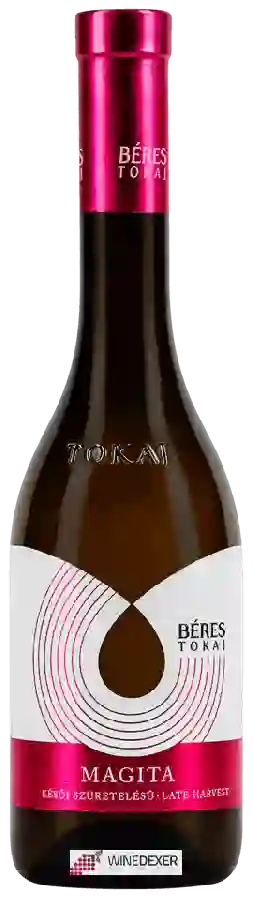
Winery BéresMagita Késői Szüretelésű Late Harvest
 Sweet wine


This wine generally goes well with
Wine flavors and olphactive analysis



On the nose the Magita Késői Szüretelésű Late Harvest of Winery Béres in the region of Tokaj often reveals types of flavors of non oak, earth or microbio and sometimes also flavors of oak, tree fruit or dried fruit.
Details and technical informations about Winery Béres's Magita Késői Szüretelésű Late Harvest.
Discover the grape variety: Ribol
Ribol noir is a grape variety that originated in France (Languedoc). It produces a variety of grape used for wine making. However, it can also be found eating on our tables! You can find Ribol noir grown in these vineyards: South West, Cognac, Bordeaux, Languedoc & Roussillon, Rhone Valley, Provence & Corsica.
Last vintages of this wine
The best vintages of Magita Késői Szüretelésű Late Harvest from Winery Béres are 2013, 0, 2016, 2014
Informations about the Winery Béres
The Winery Béres is one of of the world's greatest estates. It offers 35 wines for sale in the of Tokaj to come and discover on site or to buy online.

The wine region of Tokaj
Tokaj (formerly Tokaj-Hegyalja) has Long been Hungary's most famous and respected wine region, thanks mostly to its nectar-like, botrytized Tokaji dessert wines. The region and its wine are held in such esteem in Hungary that the national anthem thanks God for it: Tokaj szolovesszein nektárt csepegtettél - into the vineyards of Tokaj you dripped Sweet nectar The region is located in the northeast of Hungary, near the border with Slovakia. Comprising roughly 30 small towns and villages, it measures 40 kilometers (25 miles) from southwest to northeast, making it roughly the same Size as Burgundy's Côte d'Or. At its very southern edge is the town of Tokaj from which the region and its wines ultimate take their name.
The word of the wine: Light (taste of)
Taste close to oxidation, characteristic of champagnes altered by prolonged exposure to light.