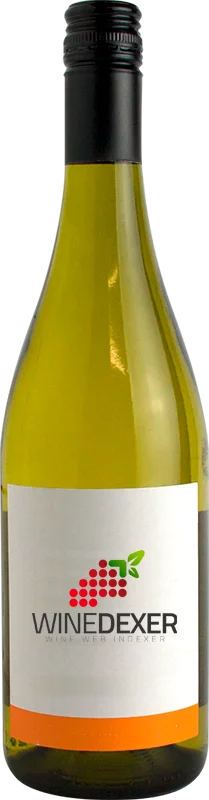
Winery Archil GuniavaKvaliti Tsitska
 White wine



This wine generally goes well with
Details and technical informations about Winery Archil Guniava's Kvaliti Tsitska.
Discover the grape variety: Saint Pierre doré
Belonging to the Estaing wines, the Saint Pierre doré is also called Roussellou. With an average budding, this variety is presented in the form of full, winged, elongated and very large bunches, with pulpy, spherical and medium-sized berries. When ripe, the fruit is golden-white in colour, with bronze leaves, which may be three-lobed or whole. The red colour is also found on the internodes of its herbaceous branch. For best results, a fairly long pruning will suit the Saint Pierre Doré, which is not overly afraid of oidium or mildew, but more afraid of grey rot. The characteristics of the roussellou mean that it could play a major role in the production of sparkling wines. The vine does indeed give a very acidic taste, not very sweet and with low degree aromas. It has been noted that the extent of the vineyard recorded in 1958 is 123 Ha, to be reduced to 1 Ha in 1994 on the French territory.
Last vintages of this wine
The best vintages of Kvaliti Tsitska from Winery Archil Guniava are 2017, 0
Informations about the Winery Archil Guniava
The Winery Archil Guniava is one of of the world's greatest estates. It offers 6 wines for sale in the of Kakheti to come and discover on site or to buy online.

The wine region of Kakheti
Kakheti is the most important wine region in Georgia in quantitative, qualitative and even historic terms. Almost three-quarters of the country's wine Grapes are grown here, on land that has been used for viticulture for thousands of years. Kakheti is home to some of the oldest human habitations in the entire Caucasus region, and archaeological findings have suggested that wine has been produced here for several thousand years. The region's strong relationship with wine and Vine was captured in Georgia's famous hymn 'Thou Art a Vineyard', written in the 12th Century by King Demetrius I.
The word of the wine: Maturing (champagne)
After riddling, the bottles are stored on "point", upside down, with the neck of one bottle in the bottom of the other. The duration of this maturation is very important: in contact with the dead yeasts, the wine takes on subtle aromas and gains in roundness and fatness. A brut without year must remain at least 15 months in the cellar after bottling, a vintage 36 months.