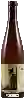
Winery ApfelbacherDettelbacher Berg-Rondell Riesling Spatlese
 White wine
In the mouth this white wine is a with a nice freshness.
This wine generally goes well with pork, poultry or shellfish.

Taste structure of the Dettelbacher Berg-Rondell Riesling Spatlese from the Winery Apfelbacher
Light | Bold | |
Dry | Sweet | |
Soft | Acidic |
In the mouth the Dettelbacher Berg-Rondell Riesling Spatlese of Winery Apfelbacher in the region of Franken is a with a nice freshness.
Food and wine pairings with Dettelbacher Berg-Rondell Riesling Spatlese
Pairings that work perfectly with Dettelbacher Berg-Rondell Riesling Spatlese



Original food and wine pairings with Dettelbacher Berg-Rondell Riesling Spatlese


The Dettelbacher Berg-Rondell Riesling Spatlese of Winery Apfelbacher matches generally quite well with dishes of pork, shellfish or spicy food such as recipes of spaghetti squash with cream and bacon, lobster in court-bouillon or risotto milanese.
Details and technical informations about Winery Apfelbacher's Dettelbacher Berg-Rondell Riesling Spatlese.
Discover the grape variety: Riesling
Crystalline, taut whites with vibrant acidity and aromas of citrus, green apple, white flowers, vineyard peach and mineral/petrol notes with age. Made as dry (Trocken, Alsace), off-dry (Kabinett, Spätlese) and sweet (Auslese, Beerenauslese, Trockenbeerenauslese, late harvest). Star of the Moselle, Rheingau, Alsace AOC and Wachau. Also exported to Clare Valley and Finger Lakes.
Informations about the Winery Apfelbacher
The Winery Apfelbacher is one of of the world's great estates. It offers 40 wines for sale in the of Franken to come and discover on site or to buy online.

The wine region of Franken
Homeland of German Silvaner: dry, straight, mineral and lively whites with notes of green apple, citrus, fresh herbs and a saline touch, planted here for over 350 years (1,500 ha, a quarter of the vineyard). Also supple, floral Müller-Thurgau, taut Riesling, aromatic Bacchus. Some discreet reds (Spätburgunder). 6,040 ha in Bavaria along the Main around Würzburg, red sandstone and shell-limestone soils.
The word of the wine: Passerillage
Concentration of the grape by drying out, under the influence of wind or sun, as opposed to botrytisation, which is the concentration obtained by the development of the "noble rot" for which Botrytis cinerea is responsible. The word is mainly used for sweet wines.