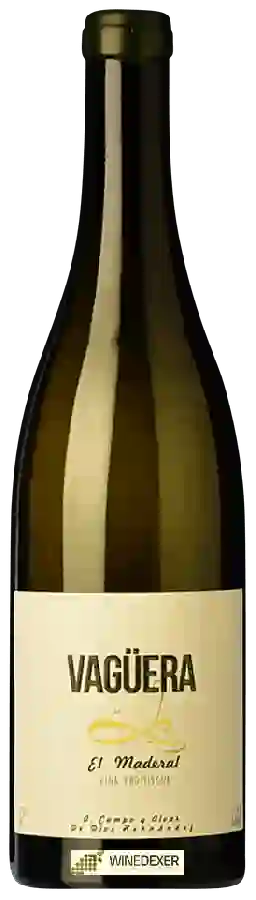
Winery Alvar de DiosVagüera El Maderal
 White wine


This wine generally goes well with
Wine flavors and olphactive analysis




On the nose the Vagüera El Maderal of Winery Alvar de Dios in the region of Castille-et-Léon often reveals types of flavors of earth, microbio or citrus fruit.
Details and technical informations about Winery Alvar de Dios's Vagüera El Maderal.
Discover the grape variety: Molinera gorda
An ancient table grape of Spanish origin. Little known in France, it can still be found in Italy, Australia, the United States (California), Mexico where it is grown in pergolas, etc. It should not be confused with the molinara grown and known in Italy.
Last vintages of this wine

The best vintages of Vagüera El Maderal from Winery Alvar de Dios are 2014, 2016, 0, 2015
Informations about the Winery Alvar de Dios
The Winery Alvar de Dios is one of of the world's greatest estates. It offers 6 wines for sale in the of Toro to come and discover on site or to buy online.

The wine region of Toro
The wine region of Toro is located in the region of Castille-et-Léon of Spain. Wineries and vineyards like the Domaine Teso La Monja or the Domaine Teso La Monja produce mainly wines red, white and sweet. The most planted grape varieties in the region of Toro are Tempranillo, Verdejo and Pinot gris, they are then used in wines in blends or as a single variety. On the nose of Toro often reveals types of flavors of cherry, espresso or black olive and sometimes also flavors of menthol, bramble or cigar box.
The wine region of Castille-et-Léon
Located in the northern half of the Central Iberian plateau, Castilla y León is the largest of Spain's 17 administrative regions, covering about one-fifth of the country's total area. It extends about 350 kilometres (220 miles) from central Spain to the northern coast. Just as wide, it connects the Rioja wine region to the Portuguese border. Red wines reign supreme in Castilla y León, and the Tempranillo grape is undoubtedly the king.
The word of the wine: Cooked wine
In Provence, wine made from must cooked and reduced over a wood fire, traditionally consumed at Christmas time with the thirteen desserts.