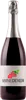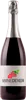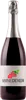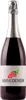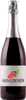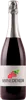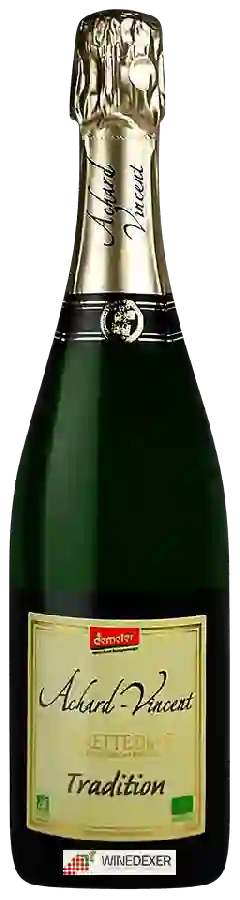
Winery Achard-VincentTradition
 Sparkling wine


This wine generally goes well with

Details and technical informations about Winery Achard-Vincent's Tradition.
Discover the grape variety: Clairette
Vibrant and fresh rosés and clairets with a pale robe and tender mouth, featuring aromas of white flowers, citrus, fennel and delicate anise notes. Moderate acidity, light finish. A pink-skinned mutation of clairette blanche, occasionally blended into Provençal and Languedoc rosés. Clairette blanche signs Clairette de Die, Clairette du Languedoc AOC and enters Châteauneuf-du-Pape whites. Native southern French grape.
Last vintages of this wine

The best vintages of Tradition from Winery Achard-Vincent are 2015
Informations about the Winery Achard-Vincent
The Winery Achard-Vincent is one of of the world's greatest estates. It offers 11 wines for sale in the of Clairette de Die to come and discover on site or to buy online.

The wine region of Clairette de Die
Sparkling AOC in the Drôme (Rhône valley), Dioise ancestral method (single bottle fermentation). Muscat Blanc à Petits Grains (min. 75%, topped up with Clairette): fine bubbles, pale to golden colour, ~7-8% alcohol — brilliant aromas of rose, honeysuckle, citrus, honey, peach, apricot, mango, litchi; sweet and refreshing. Light festive wine, drink young and chilled (6-8°C).
The wine region of Rhone Valley
France's 2nd-largest AOC vineyard, two complementary worlds. Northern: pure Syrah in signature reds (Côte-Rôtie, Hermitage, Cornas), deep and peppery with blackberry, violet, black olive and smoked bacon notes, exceptional ageing. Opulent Viognier whites (Condrieu, apricot, flowers) and ample Marsanne-Roussanne. Southern: sun-soaked Grenache blends at Châteauneuf, Gigondas, Vacqueyras (candied fruit, garrigue).
The word of the wine: Hautain (en)
Pruning of the vine in height.