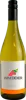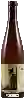
Weingut & Winzerhof EmmerichIphöfer Julius Echter Berg Scheurebe Trocken
 White wine



This wine generally goes well with
Details and technical informations about Weingut & Winzerhof Emmerich's Iphöfer Julius Echter Berg Scheurebe Trocken.
Discover the grape variety: Scheurebe
German grape variety obtained in 1916 by Georg Shere (1879/1949). It was given until then as coming from a cross between Riesling and Sylvaner, but genetic tests have shown that its father is the Bouquettraube (Bukettrebe), and it is closely related to the Kerner. The Scheurebe can be found in Austria, Germany, Belgium, Switzerland, the Netherlands, Italy, Slovenia, Great Britain, the United States (California, Virginia, ...), Canada (Ontario, British Columbia, ...), ... practically unknown in France.
Last vintages of this wine
The best vintages of Iphöfer Julius Echter Berg Scheurebe Trocken from Weingut & Winzerhof Emmerich are 0
Informations about the Weingut & Winzerhof Emmerich
The Weingut & Winzerhof Emmerich is one of of the world's greatest estates. It offers 41 wines for sale in the of Franken to come and discover on site or to buy online.

The wine region of Franken
Franken, or Franconia in English, is a wine-growing region in the northwest of Germany's historic state of Bavaria. Though Bavaria may be more famous for its beer, Franken boasts a proud viticultural tradition and is one of the most unique regions in the country. There are just over 6,100 hectares (15,073 ac) of vines Planted in Franken and around 80 percent of these are white Grape varieties. Here, Riesling plays second fiddle to the often overlooked Silvaner and Müller-Thurgau.
The word of the wine: Foxé
An animal odor found in certain reduced or old wines, which are also said to fox, in reference to the fox.