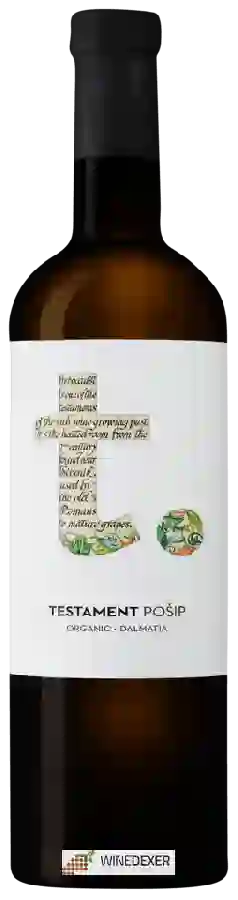
Winery TestamentPošip
 White wine



This wine generally goes well with
Wine flavors and olphactive analysis




On the nose the Pošip of Winery Testament in the region of Dalmatian Coast often reveals types of flavors of non oak, earth or microbio and sometimes also flavors of oak, tree fruit or citrus fruit.
Details and technical informations about Winery Testament's Pošip.
Discover the grape variety: Glacière
Unknown, it is still found only in Vaucluse in most cases established in arbors (our photographs), never in culture. La Glacière is a table grape, not always pleasant to eat, that was once kept either on stumps or on racks for the winter. Today, it is very rare to find this variety, which has completely disappeared.
Last vintages of this wine
The best vintages of Pošip from Winery Testament are 2017, 2019, 0, 2018
Informations about the Winery Testament
The Winery Testament is one of of the world's greatest estates. It offers 5 wines for sale in the of Dalmatian Coast to come and discover on site or to buy online.

The wine region of Dalmatian Coast
The wine region of Dalmatian Coast of Croatia. Wineries and vineyards like the Domaine Bibich or the Domaine Boškinac produce mainly wines red and white. The most planted grape varieties in the region of Dalmatian Coast are Plavac mali, Merlot and Cabernet-Sauvignon, they are then used in wines in blends or as a single variety. On the nose of Dalmatian Coast often reveals types of flavors of pineapple, black currant or cola and sometimes also flavors of dark fruit, cinnamon or prune.
The word of the wine: Away from the eye
See len de l'el.