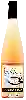
Winery Talai - BerriRosé
 wine
wine
This wine generally goes well with
The Rosé of the Winery Talai - Berri is in the top 0 of wines of Getariako Txakolina.
Details and technical informations about Winery Talai - Berri's Rosé.
Discover the grape variety: Gaillard 157
Interspecific crossing carried out in 1891 by Fernand Gaillard (1821-1905) between (triumph x eumelan) and 1 Seibel. This direct-producing hybrid was multiplied in particular in the south-west and centre-west of France as well as in the departments of the Rhône valley and the Ain.
Informations about the Winery Talai - Berri
The Winery Talai - Berri is one of of the world's greatest estates. It offers 7 wines for sale in the of Getariako Txakolina to come and discover on site or to buy online.

The wine region of Getariako Txakolina
The wine region of Getariako Txakolina is located in the region of El Pais Vasco of Spain. Wineries and vineyards like the Domaine Ameztoi or the Domaine Ulacia produce mainly wines white, pink and sparkling. The most planted grape varieties in the region of Getariako Txakolina are Chardonnay, Gros Manseng and Petit Courbu, they are then used in wines in blends or as a single variety. On the nose of Getariako Txakolina often reveals types of flavors of pineapple, spices or straw and sometimes also flavors of gooseberry, lychee or yeast.
The wine region of El Pais Vasco
El Pais Vasco (officially La Comunidad Autonoma del País Vasco) is a fiercely independent region on the northern coast of Spain, near the Pyrenees and the border with France. In Basque, the region is called Euskadi, but to most English speakers it is referred to as the Basque Country. The Cantabrian Mountains form its western boundary, while the famous wine region of La RiojaLies to the South. Despite this, the region is not Particularly well known for its wine, although a group of determined producers have Long fought for recognition.
The word of the wine: Courgée
Name of the fruiting branch left after pruning and which is then arched along the trellis in the Jura (in the Mâconnais, it is called the tail).