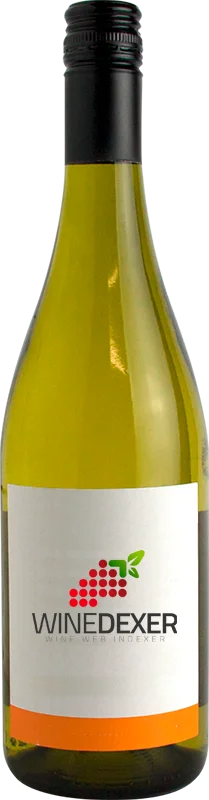
Winery S.J. MontignyGrauer Burgunder Vom Buntsandstein Trocken
 White wine
In the mouth this white wine is a .
This wine generally goes well with pork, cured meat or mushrooms.
Taste structure of the Grauer Burgunder Vom Buntsandstein Trocken from the Winery S.J. Montigny
Light | Bold | |
Dry | Sweet | |
Soft | Acidic |
In the mouth the Grauer Burgunder Vom Buntsandstein Trocken of Winery S.J. Montigny in the region of Nahe is a .
Food and wine pairings with Grauer Burgunder Vom Buntsandstein Trocken
Pairings that work perfectly with Grauer Burgunder Vom Buntsandstein Trocken


Original food and wine pairings with Grauer Burgunder Vom Buntsandstein Trocken

The Grauer Burgunder Vom Buntsandstein Trocken of Winery S.J. Montigny matches generally quite well with dishes of pork, spicy food or mushrooms such as recipes of traditional flemish carbonades, chicken massala or pork blanquette.
Details and technical informations about Winery S.J. Montigny's Grauer Burgunder Vom Buntsandstein Trocken.
Discover the grape variety: Cabernet-Jura
An interspecific cross between Cabernet Sauvignon and a still unknown relative, obtained in 1991 by Valentin Blatter of Soyhières (Switzerland). Cabernet-Jura can be found in Switzerland, Belgium, the Netherlands, Germany, etc., but is still little known in France.
Informations about the Winery S.J. Montigny
The Winery S.J. Montigny is one of of the world's great estates. It offers 54 wines for sale in the of Nahe to come and discover on site or to buy online.

The wine region of Nahe
Nahe is one of the smaller German wine regions, named after the Nahe river which joins the Rhein at Rheinhessen/bingen">Bingen. The viticultural carea here is characterised by dramatic topography with steep slopes and craggy outcrops of metamorphic rock. Like most of the regions on or near the Rhine, its most prestigious wines are made from Riesling. There are around 4,000 hectares (10,000 acres) of Vineyards, spread across seven Grosslagen (wine districts) and over 300 Einzellagen (individual vineyard sites).
The word of the wine: Size (champagne)
Juices that flow from the press after the cuvée, at the second pressing. Less fine, often more vegetal, it is mainly used to make the first price champagnes.