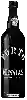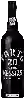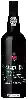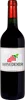
Winery Sete BadosBardo Touriga Nacional
 wine
wine
This wine generally goes well with
The Bardo Touriga Nacional of the Winery Sete Bados is in the top 0 of wines of Douro.
Details and technical informations about Winery Sete Bados's Bardo Touriga Nacional.
Discover the grape variety: Iona
It is said to come from a seedling of diana - the latter is also a seedling of catawba - and propagated in 1860 by Dr. C.W. Grant, the introduction in the United States would date from 1863. Other ampelographers give it as coming directly from a seedling of catawba. The only certainty is that it is an interspecific cross with Vitis Labrusca as a parent. It should be noted that it is the parent of the diamond and the golden muscat. Iona can be found in the United States, Canada, New Zealand, etc. In France it is totally unknown. This variety can only be of interest to amateur gardeners, on the one hand to enlarge their collections and on the other hand, because it produces an excellent juice.
Informations about the Winery Sete Bados
The Winery Sete Bados is one of of the world's greatest estates. It offers 4 wines for sale in the of Douro to come and discover on site or to buy online.

The wine region of Douro
The wine region of Douro is located in the region of Duriense of Portugal. We currently count 1110 estates and châteaux in the of Douro, producing 4307 different wines in conventional, organic and biodynamic agriculture. The wines of Douro go well with generally quite well with dishes .
The wine region of Duriense
Duriense is a Portuguese wine region covering the same area as the Douro DOC and the Port wine region. In difference from Douro DOC, Duriense VR is a designation at the lower Vinho Regional (VR) level, which corresponds to table wines with a geographical indication under European Union wine regulations, similar to a French vin de pays region. Thus, it is the simpler or less typical wines of the Douro region that are sold using a Duriense VR label. Before the creation of a separate Duriense VR, the Douro vineyards were Part of the former Transmontano/tras-os-montes">Trás-os-Montes VR, which is now called Transmontano VR and no longer includes the Douro vineyards.
The word of the wine: Stabilization
All the treatments intended for the good conservation of wines.