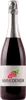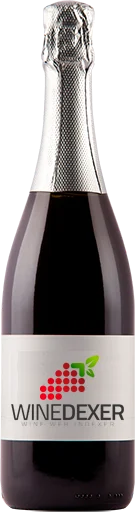
Winery SchlumbergerFranzl Sparkling Brut
 Sparkling wine



This wine generally goes well with
Details and technical informations about Winery Schlumberger's Franzl Sparkling Brut.
Discover the grape variety: Liliorila
White Liliorila is a grape variety that originated in France (Bordeaux). It produces a variety of grape specially used for the elaboration of wine. It is rare to find this grape to eat on our tables. This variety of grape is characterized by small to medium sized bunches and small grapes. White Liliorila can be found in several vineyards: South West, Cognac, Bordeaux, Provence & Corsica, Languedoc & Roussillon, Rhone Valley, Armagnac.
Last vintages of this wine
The best vintages of Franzl Sparkling Brut from Winery Schlumberger are 2012, 0
Informations about the Winery Schlumberger
The Winery Schlumberger is one of of the world's great estates. It offers 35 wines for sale in the of Wien to come and discover on site or to buy online.

The wine region of Wien
Weinviertel DAC – whose name translates as "wine quarter" – is an appellation in Niederösterreich (Lower Austria). It is by far the largest Districtus Austriae Controllatus wine region in Austria. It was also the first Austrian wine region to be given that title, in 2002, with a DAC Reserve designation added in 2009. The designation applies only to white wines from the Grüner Veltliner Grape variety.
The wine region of Weinland
Weinviertel DAC – whose name translates as "wine quarter" – is an appellation in Niederösterreich (Lower Austria). It is by far the largest Districtus Austriae Controllatus wine region in Austria. It was also the first Austrian wine region to be given that title, in 2002, with a DAC Reserve designation added in 2009. The designation applies only to white wines from the Grüner Veltliner Grape variety.
The word of the wine: Tartar (deposit)
White, chalky deposits that occur as a result of precipitation inside bottles and are often considered by consumers as a defect. They are in fact tartaric salts formed by tartaric acid, potassium and calcium naturally present in the wine. This deposit does not alter the quality of the wine and can be eliminated by a simple decanting.