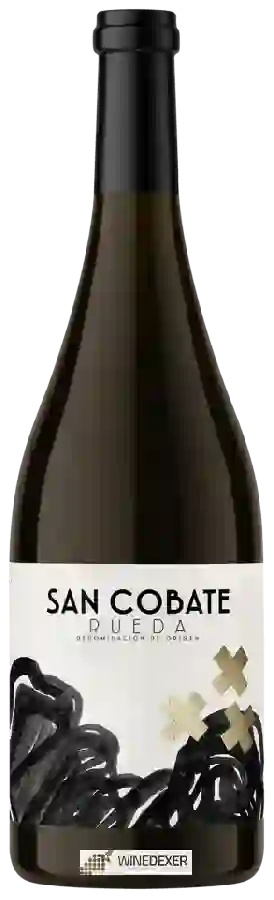
Winery San CobateBranco
 wine
wine
This wine generally goes well with
The Branco of the Winery San Cobate is in the top 0 of wines of Rueda.

Details and technical informations about Winery San Cobate's Branco.
Discover the grape variety: Gouget noir
Simple, light and fruity reds with a lightly coloured clear ruby hue, soft tannins and an airy palate with moderate acidity, showing understated aromas of red fruits. Discreet, rustic profile. Almost disappeared, preserved in INRAE varietal collections, it bears witness to the pre-phylloxera ampelographic diversity of central and south-western France. Rare French black variety (synonym of Gouget), formerly grown in central and south-western France.
Last vintages of this wine


The best vintages of Branco from Winery San Cobate are 2018, 0, 2017
Informations about the Winery San Cobate
The Winery San Cobate is one of of the world's greatest estates. It offers 3 wines for sale in the of Rueda to come and discover on site or to buy online.

The wine region of Rueda
Benchmark for lively Spanish whites on the high plateaus of Castilla-León. Signature Verdejo: aromatic dry whites with notes of grapefruit, exotic fruit, cut grass, anise and fennel, a characteristic slightly bitter finish and a taut palate. Direct style, ideal as an aperitif. Also lively Sauvignon Blanc, ample Viura and historic Palomino.
The wine region of Castille-et-Léon
Cradle of great Castilian reds on high-altitude plateaus (450-1000 m) of the Duero. Tempranillo king (Tinto Fino, Tinta de Toro): powerful, structured reds with notes of black cherry, blackberry, plum, leather and spices, firm tannins and length worthy of long ageing. Stars: Ribera del Duero (Vega Sicilia, Pingus), fleshy Toro, Bierzo (fresh mineral Mencía). Lively herbaceous Verdejo whites from Rueda, cut grass and citrus.
The word of the wine: Reduction
A physiological and chemical phenomenon that occurs in wine in the absence of oxygen. The smell of reduction is characterized by animal and sometimes fetid notes that disappear in principle with aeration. It is recommended to decant reduced wines.