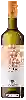
Winery RotkäppchenHolunderblüte
 Sweet wine


This wine generally goes well with
Details and technical informations about Winery Rotkäppchen's Holunderblüte.
Discover the grape variety: Ortega
An intraspecific cross between Müller-Thurgau and Siegerrebe obtained in 1948 by Hans Breider (1908-1960) at the Bavarian Research Station for Viticulture and Horticulture in Veitsnöchheim (Germany). Almost unknown in France, it can be found in Germany, Belgium, England, the United States and Canada. Its early maturity and muscatel taste have sometimes led to it being offered as a table grape on market stalls.
Last vintages of this wine
The best vintages of Holunderblüte from Winery Rotkäppchen are 0
Informations about the Winery Rotkäppchen
The Winery Rotkäppchen is one of of the world's great estates. It offers 44 wines for sale in the of Saale-Unstrut to come and discover on site or to buy online.

The wine region of Saale-Unstrut
Saale-Unstrut is the northernmost of Germany's 13 wine-growing regions. At 51 degrees northern latitude, it is one of the most northerly wine regions in the world. It takes its name from the two rivers on the banks of which the Vines of the region grow, and is composed of three non-contiguous Parts located mainly in the federal state of Saxony-Anhalt, with around 650 hectares (1600 acres) of Vineyards, often terraced, on South and south-west-facing slopes along the narrow river valleys. A smaller area of 20 hectares (50 acres) is located in the state of Thüringen and a block of just 7 hectares (17 acres) in Brandenburg.
The word of the wine: Presses
The juice that results from pressing the grapes after fermentation. At the end of the maceration, the vats are emptied, the first juice obtained is called the free-run wine and the marc remaining at the bottom of the vat is then pressed to give the press wine. We say more quickly "the presses". Their quality varies according to the vintage and the maceration. A too vigorous extraction releases the tannins of pips and the wine of press can then prove to be very astringent. Often the winemaker raises it separately, deciding later whether or not to incorporate it totally or partially into the grand vin.