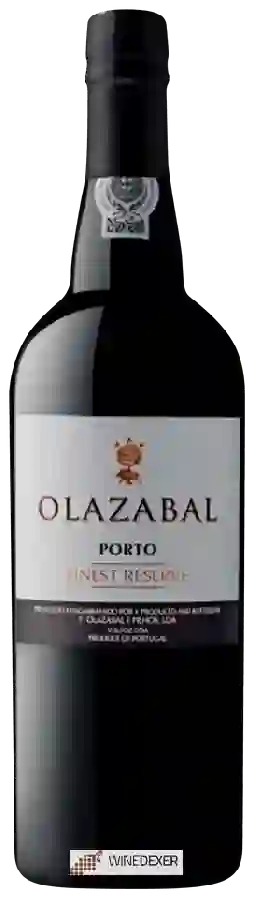
Winery Quinta do Vale MeãoOlazabal Finest Reserve Port
 Natural sweet wine



This wine is a blend of 3 varietals which are the Tinta Barroca, the Touriga franca and the Touriga nacional.
This wine generally goes well with beef and mature and hard cheese.

Wine flavors and olphactive analysis

On the nose the Olazabal Finest Reserve Port of Winery Quinta do Vale Meão in the region of Navarre often reveals types of flavors of oak, red fruit.
Food and wine pairings with Olazabal Finest Reserve Port
Pairings that work perfectly with Olazabal Finest Reserve Port


Original food and wine pairings with Olazabal Finest Reserve Port
The Olazabal Finest Reserve Port of Winery Quinta do Vale Meão matches generally quite well with dishes of beef or mature and hard cheese such as recipes of beef bobotie or pasta with zucchini sauce.
Details and technical informations about Winery Quinta do Vale Meão's Olazabal Finest Reserve Port.
Discover the grape variety: Tinta Barroca
Intensely coloured, warm reds, sun-drenched with generous alcohol, with aromas of red and black candied fruits, plum, gentle spices and cocoa notes. Ripe tannins and a broad palate. Traditional partner of touriga nacional and touriga franca in the blends of great Port wines (especially Tawny and Ruby) and modern dry Douro DOC. Native Portuguese variety from the Douro and Trás-os-Montes.
Last vintages of this wine
The best vintages of Olazabal Finest Reserve Port from Winery Quinta do Vale Meão are 0
Informations about the Winery Quinta do Vale Meão
The Winery Quinta do Vale Meão is one of of the world's greatest estates. It offers 11 wines for sale in the of Navarre to come and discover on site or to buy online.

The wine region of Navarre
Spanish reference for great Garnacha rosés: raspberry-pink colour, notes of crushed strawberry, cherry, citrus and white flowers, dry and gourmet palate. The emblematic grape (~70% of reds in the past), also in supple, sun-filled reds. Tempranillo on the rise in modern blends, fine spicy Graciano, Cabernet and Merlot. Fresh Chardonnay and Viura whites.
The word of the wine: Tartar (deposit)
White, chalky deposits that occur as a result of precipitation inside bottles and are often considered by consumers as a defect. They are in fact tartaric salts formed by tartaric acid, potassium and calcium naturally present in the wine. This deposit does not alter the quality of the wine and can be eliminated by a simple decanting.