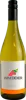
Winery Quinta de São BartolomeuBartolo Branco
 wine
wine
This wine generally goes well with
The Bartolo Branco of the Winery Quinta de São Bartolomeu is in the top 0 of wines of Lisboa.
Details and technical informations about Winery Quinta de São Bartolomeu's Bartolo Branco.
Discover the grape variety: Aubun
Aubun is not to be confused with another grape variety with the same sound, aubin. This one is a black grape plant of which the Vaucluse is the probable cradle. Covering nearly 5,400 hectares of vineyards in the late 1990s, its cultivation was reduced to some 1,400 hectares in the mid-2000s. California and Australia also have discreet plantations. In the Var, Lot-et-Garonne, Gers, Ardèche and other departments, aubun is authorized, if not recommended. Its third-period ripeness promises medium to large bunches of compact, cylindrical grapes that will produce medium-quality wine. Quite alcoholic, the wine produced from Aubun is a lightly colored red. After budburst, the shoots bear young branches covered with a cottony veil. The young leaves are yellowish and downy. The older ones have pubescent, cottony blades with 5 to 7 limbs.
Informations about the Winery Quinta de São Bartolomeu
The Winery Quinta de São Bartolomeu is one of of the world's greatest estates. It offers 15 wines for sale in the of Lisboa to come and discover on site or to buy online.

The wine region of Lisboa
Lisboa (formerly Estremadura) is a prolific wine region located at the Center of Portugal's Atlantic coast. Despite being one of the country's most productive winemaking areas, its name remains relatively obscure in wine terms, as its wines have traditionally been labeled with the names of the local sub-regions, which include Alenquer, Bucelas and Colares. The region is also home to Portugal's capital, Lisbon. The region fell under the VR (Vinho Regional) classification until 2008, when the category was renamed IGP (Indicaciones Geográficas Protegidas) to bring it into line with the rest of Europe.
The word of the wine: Sabrer (champagne)
A cavalier and folkloric way of opening a bottle of champagne by breaking the neck with a sharp blow given with the top of the blade of a sabre.