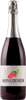
Winery Pierre BoeverCoteaux Champenois Bouzy Rouge
 Red wine
This wine generally goes well with

Details and technical informations about Winery Pierre Boever's Coteaux Champenois Bouzy Rouge.
Discover the grape variety: Arrufiac
Structured, aromatic whites with a golden hue, a broad palate and preserved acidity, with refined aromas of candied citrus, grapefruit, yellow fruits (pear, peach), white flowers, light honey and spice notes. Adds structure and finesse to Béarn blends, both in crisp dry and passerillé sweet styles. Component of Pacherenc du Vic-Bilh AOC and Béarn AOC. Very rare native Béarn variety, undergoing a revival.
Informations about the Winery Pierre Boever
The Winery Pierre Boever is one of wineries to follow in Coteaux Champenois.. It offers 10 wines for sale in the of Coteaux Champenois to come and discover on site or to buy online.

The wine region of Coteaux Champenois
Champagne AOC for still wines produced in the Champagne area, from the same grape varieties. Fine and taut flagship reds with signature notes of red cherry, wild strawberry, raspberry, flowers and chalky mineral touch, light tannins and lively palate — Pinot Noir signature at Bouzy and Ambonnay as reference (Bouzy red). Whites: taut Chardonnay (citrus, white flowers, chalk). Cool marginal climate for red.
The wine region of Champagne
World benchmark sparkling wines: fine bubbles, citrusy tension, notes of brioche, toasted almond, white flowers and white-fleshed fruits after ageing on lees. Three grapes blended or solo: fleshy Pinot Noir (38%), fruity Meunier (33%), chiselled Chardonnay (28%). From straight Blanc de Blancs to vinous Blanc de Noirs, from non-vintage Brut to age-worthy Millésimé. AOC since 1927, 34,300 ha on chalk, 17 Grands Crus and 44 Premiers Crus.
The word of the wine: Local wine
Table wine, but with the origin indicated. It corresponds to a particular legislation: the freedom to use grape varieties is greater than for the AOC, but the quality criteria such as the approval tastings can sometimes be more demanding. The legislation is still evolving, but for the moment there are three levels: regional (e.g. Vin de Pays d'Oc), departmental and local (e.g. Côtes de Thongue).