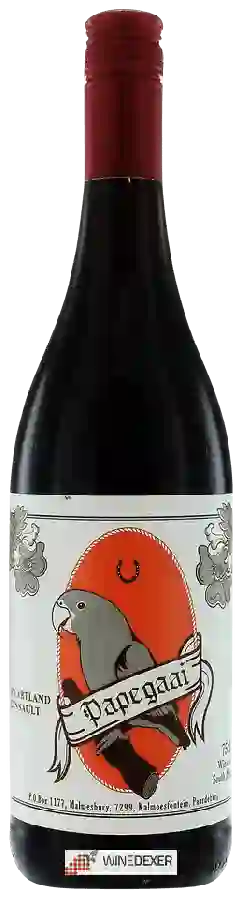
Winery PapegaaiCinsault
 Red wine



This wine generally goes well with

Wine flavors and olphactive analysis






On the nose the Cinsault of Winery Papegaai in the region of Western Cape often reveals types of flavors of cream, cherry or oaky and sometimes also flavors of smoke, earthy or blackberry.
Details and technical informations about Winery Papegaai's Cinsault.
Discover the grape variety: Camaraou
Simple dry whites with a pale golden robe, a supple palate with moderate acidity and understated aromas of citrus and white Pyrenean flowers. Airy rustic profile. Preserved in a few heritage Béarn parcels and ampelographic collections, it belongs to the ancient South-West grape varieties studied for their genetic and historical interest. French autochthonous white grape from the South-West, grown mainly in Béarn.
Last vintages of this wine
The best vintages of Cinsault from Winery Papegaai are 2017, 2016, 2019, 2018
Informations about the Winery Papegaai
The Winery Papegaai is one of of the world's greatest estates. It offers 3 wines for sale in the of Swartland to come and discover on site or to buy online.

The wine region of Swartland
South African renaissance north of Cape Town: signature Chenin Blanc as king white (old bush vines) — full and mineral with notes of quince, honey, yellow fruits, toasted almond and a saline touch, noble texture and a refined finish. Signature Syrah as king red — spicy and fleshy with blackberry, raspberry, garrigue and pepper, fine tannins. Grenache and Cinsault complete it. Non-interventionist winemaking (whole bunch, old foudres).
The wine region of Western Cape
Cradle of South African wine. Signature Chenin Blanc (Steen, 20%) in ample, fresh whites with notes of quince, yellow apple, honey and acacia flower, from crisp dry to sweet. Sharp, iodised Sauvignon Blanc (Walker Bay, Constantia), balanced Chardonnay. Reds: emblematic Pinotage with roasted aromas (coffee, plum, smoke), firm Cabernet Sauvignon, spicy Syrah.
The word of the wine: Drawing (liqueur de)
In champagne and sparkling wines of traditional method, addition to the wine, at the time of bottling (tirage) of sugars and yeasts dissolved in wine. These components will provoke the second fermentation in the bottle leading to the formation of carbon dioxide bubbles.