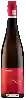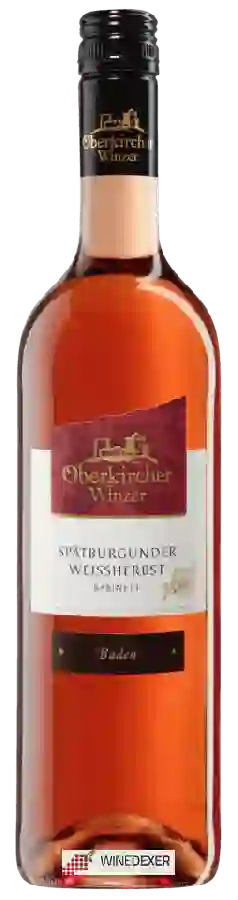
Winery Oberkircher WinzerSpätburgunder Weissherbst Kabinett
 Pink wine



This wine generally goes well with vegetarian

Food and wine pairings with Spätburgunder Weissherbst Kabinett
Pairings that work perfectly with Spätburgunder Weissherbst Kabinett

Original food and wine pairings with Spätburgunder Weissherbst Kabinett
The Spätburgunder Weissherbst Kabinett of Winery Oberkircher Winzer matches generally quite well with dishes of vegetarian such as recipes of magic cake cheese quiche.
Details and technical informations about Winery Oberkircher Winzer's Spätburgunder Weissherbst Kabinett.
Discover the grape variety: Len de l’El
Lively, aromatic dry or medium-sweet whites with a pale golden colour, airy palate with fresh acidity, signature aromas of white flowers, citrus (lemon, grapefruit) and exotic fruits (pineapple, passion fruit). Also as honeyed medium-sweet and sweet wines. Star of the Gaillac AOC appellation in dry and medium-sweet white, it defines the Gaillac identity alongside Mauzac and Sauvignon. Indigenous French white variety from the South-West, grown at Gaillac (Tarn).
Last vintages of this wine
The best vintages of Spätburgunder Weissherbst Kabinett from Winery Oberkircher Winzer are 0
Informations about the Winery Oberkircher Winzer
The Winery Oberkircher Winzer is one of of the world's great estates. It offers 77 wines for sale in the of Baden to come and discover on site or to buy online.

The wine region of Baden
German capital of Pinot Noir (Spätburgunder): silky, fine reds with notes of red fruits, cherry, undergrowth and sweet spices, melted tannins. Round Grauburgunder (Pinot Gris), lively Weissburgunder, supple Müller-Thurgau, mineral Riesling. Germany's 3rd region (15,000 ha) in Baden-Württemberg facing Alsace, one of the country's warmest climates, volcanic soils at the Kaiserstuhl. Cradle of modern great German reds, elegant and fine.
The word of the wine: Terroir
Strictly speaking, the notion of terroir corresponds to the geological characteristics of a vineyard. However, when we talk about terroir, we take into account the soil, the climate (even the microclimate), the flora, the fauna, and the human factor that characterizes the practices that make up the art of the craft.