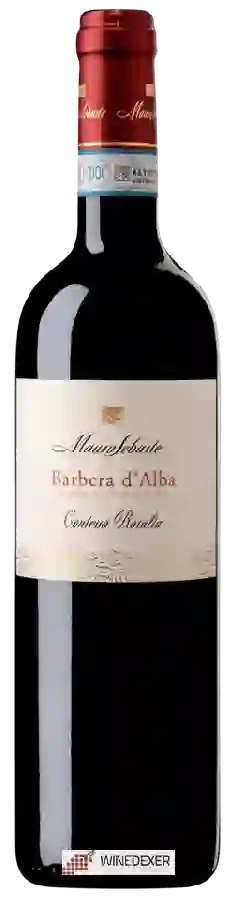
Winery Mauro SebasteContessa Rosalia Barbera d'Alba
 Red wine



In the mouth this red wine is a powerful with a nice freshness.
This wine generally goes well with pork, poultry or veal.

Taste structure of the Contessa Rosalia Barbera d'Alba from the Winery Mauro Sebaste
Light | Bold | |
Smooth | Tannic | |
Dry | Sweet | |
Soft | Acidic |
In the mouth the Contessa Rosalia Barbera d'Alba of Winery Mauro Sebaste in the region of Piedmont is a powerful with a nice freshness.
Wine flavors and olphactive analysis


On the nose the Contessa Rosalia Barbera d'Alba of Winery Mauro Sebaste in the region of Piedmont often reveals types of flavors of spices, red fruit.
Food and wine pairings with Contessa Rosalia Barbera d'Alba
Pairings that work perfectly with Contessa Rosalia Barbera d'Alba



Original food and wine pairings with Contessa Rosalia Barbera d'Alba


The Contessa Rosalia Barbera d'Alba of Winery Mauro Sebaste matches generally quite well with dishes of pasta, veal or pork such as recipes of trofie ( pasta ) paradiso, sauté of veal with corsican style or ideas for savoury pancake toppings.
Details and technical informations about Winery Mauro Sebaste's Contessa Rosalia Barbera d'Alba.
Discover the grape variety: Humagne blanche
Structured, original whites with a golden robe, ample palate and fresh alpine acidity, showing aromas of yellow fruits (pear, quince), candied citrus, linden, honey, white flowers and mineral notes with a slightly bitter finish. Reputed tonic, once given to new mothers. Discreet star of the Valais hillsides (Sierre, Sion, Conthey). Autochthonous Valais variety, one of Switzerland's oldest (recorded since the 14th century), with no link to humagne rouge.
Last vintages of this wine
The best vintages of Contessa Rosalia Barbera d'Alba from Winery Mauro Sebaste are 2018, 0, 2017
Informations about the Winery Mauro Sebaste
The Winery Mauro Sebaste is one of of the world's great estates. It offers 27 wines for sale in the of Piedmont to come and discover on site or to buy online.

The wine region of Piedmont
Kingdom of Nebbiolo: Barolo and Barbaresco DOCG, long-ageing reds with firm tannins and lively acidity, complex aromas of withered rose, sour cherry, tar, truffle and undergrowth. More accessible, tangy Barbera on red fruit, supple, crisp Dolcetto. Sweet, floral sparkling Moscato d'Asti, mineral, lemony Gavi (Cortese) white, round, almondy Arneis from Roero. 50,000 ha across the Langhe, Roero and Monferrato, UNESCO.
The word of the wine: Imperial
Bottle with a capacity of 6 liters (synonym of mathusalem).