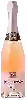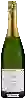
Caves de MarsignyCrémant de Bourgogne Brut
 Sparkling wine
In the mouth this sparkling wine is a powerful with a nice vivacity and a fine and pleasant bubble.
This wine generally goes well with poultry, appetizers and snacks or lean fish.
Taste structure of the Crémant de Bourgogne Brut from the Caves de Marsigny
Light | Bold | |
Soft | Acidic | |
Gentle | Fizzy |
In the mouth the Crémant de Bourgogne Brut of Caves de Marsigny in the region of Burgundy is a powerful with a nice vivacity and a fine and pleasant bubble.
Food and wine pairings with Crémant de Bourgogne Brut
Pairings that work perfectly with Crémant de Bourgogne Brut



Original food and wine pairings with Crémant de Bourgogne Brut


The Crémant de Bourgogne Brut of Caves de Marsigny matches generally quite well with dishes of shellfish, poultry or appetizers and snacks such as recipes of fondue with lao sukiyaki sauce (laos), quiche lorraine or pretzels (alsace).
Details and technical informations about Caves de Marsigny's Crémant de Bourgogne Brut.
Discover the grape variety: Cabernet franc
Cabernet Franc is one of the oldest red grape varieties in Bordeaux. The Libourne region is its terroir where it develops best. The terroirs of Saint-Emilion and Fronsac allow it to mature and develop its best range of aromas. It is also the majority in many blends. The very famous Château Cheval Blanc, for example, uses 60% Cabernet Franc. The wines produced with Cabernet Franc are medium in colour with fine tannins and subtle aromas of small red fruits and spices. When blended with Merlot and Cabernet Sauvignon, it brings complexity and a bouquet of aromas to the wine. It produces fruity wines that can be drunk quite quickly, but whose great vintages can be kept for a long time. It is an earlier grape variety than Cabernet Sauvignon, which means that it is planted as far north as the Loire Valley. In Anjou, it is also used to make sweet rosé wines. Cabernet Franc is now used in some twenty countries in Europe and throughout the world.
Informations about the Caves de Marsigny
The Caves de Marsigny is one of of the world's great estates. It offers 21 wines for sale in the of Crémant de Bourgogne to come and discover on site or to buy online.

The wine region of Crémant de Bourgogne
Recognized in 1975, the appellation crémant-de-bourgogne replaced the Sparkling wines whose quality was not very homogeneous. Its geographical area, very vast, covers more than 300 communes, of Châtillonnais, with the borders of Champagne auboise, with Beaujolais included. The AOC imposes conditions of harvest and elaboration as strict as those of the Champagne region and copied on this one, the difference residing in the duration of Maturation on lees, which is of nine months minimum, against twelve for the champagne. The Grape varieties used also bring Crémant-de-Bourgogne closer to its illustrious Champagne model, for although all the varieties of the region can be used, Pinot Noir and Chardonnay are favoured.
The wine region of Burgundy
Bourgogne is the catch-all regional appellation title of the Burgundy wine region in eastern France ("Bourgogne" is the French name for Burgundy). Burgundy has a Complex and comprehensive appellation system; counting Premier Cru and Grand Cru titles, the region has over 700 appellation titles for its wines. Thus, Burgundy wines often come from one Vineyard (or several separate vineyards) without an appellation title specific to the region, Village or even vineyard. A standard Burgundy wine may be made from grapes grown in one or more of Burgundy's 300 communes.
The word of the wine: Burgundy melon
A white grape variety from Burgundy that is not widely used in its native region, but has spread to the Nantes region. It is the exclusive variety of Muscadet. It gives a dry pale yellow wine, supple and lively, with an intense bouquet, to which maturing on lees gives fatness and aromatic complexity.