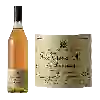
Winery Lionel DufourTrès Vieux Marc de Bourgogne
 Sweet wine
This wine generally goes well with

Details and technical informations about Winery Lionel Dufour's Très Vieux Marc de Bourgogne.
Discover the grape variety: Tempranillo Blanco
Structured, aromatic dry whites with a pale golden robe, an ample palate and preserved acidity, with signature aromas of yellow fruits (pear, peach, apricot), white flowers (acacia), citrus and herbaceous notes. Fine barrel-ageing potential, a qualitative diversification among the great modern white Riojas. Grown in Rioja DOCa, authorised in 2007. A white-skinned mutation of Tempranillo discovered by chance in 1988.
Informations about the Winery Lionel Dufour
The Winery Lionel Dufour is one of wineries to follow in Marc de Bourgogne.. It offers 270 wines for sale in the of Marc de Bourgogne to come and discover on site or to buy online.

The wine region of Marc de Bourgogne
AOC eau-de-vie from Burgundy (1942), distilled from grape marc (skins and stems) across 388 communes of Côte-d'Or, Saône-et-Loire, Yonne and Rhône. Copper pot-still distillation, minimum 2-year ageing in oak barrels or casks. Amber robe, generous bouquet of dried fruits, candied plum, vanilla, roasted hazelnut and woody spice. ≥40% vol.
The wine region of Burgundy
Absolute reference for great terroir wines: opulent, mineral Chardonnay in whites (chiselled Chablis, buttery Meursault, majestic Montrachet), fine and silky Pinot Noir in reds (full-bodied Gevrey, structured Pommard, delicate Volnay). Exceptional age-worthy wines with complex notes - red fruits, undergrowth, butter, hazelnut. Some lively Aligoté and light Gamay (Mâconnais). 29,500 ha, 84 tiered AOCs (Régionale, Village, 1er Cru, Grand Cru), 1,247 UNESCO Climats.
The word of the wine: Austere
A full-bodied, closed wine whose qualities are noticeable, but which does not express its full potential.