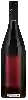
Winery Le Mas du ParadisMon Désir Crozes-Hermitage
 wine
wine
This wine generally goes well with
The Mon Désir Crozes-Hermitage of the Winery Le Mas du Paradis is in the top 0 of wines of Crozes-Hermitage.
Details and technical informations about Winery Le Mas du Paradis's Mon Désir Crozes-Hermitage.
Discover the grape variety: Troyen
An old grape variety from the Aube and Yonne departments, it was also found in the Meuse, Vosges and Moselle. It is the result of a natural intraspecific crossing between pinot noir and gouais blanc. Today, the Troyen is practically no longer multiplied.
Informations about the Winery Le Mas du Paradis
The Winery Le Mas du Paradis is one of of the world's greatest estates. It offers 5 wines for sale in the of Crozes-Hermitage to come and discover on site or to buy online.

The wine region of Crozes-Hermitage
The wine region of Crozes-Hermitage is located in the region of Rhône septentrional of Rhone Valley of France. Wineries and vineyards like the Domaine Combier or the Domaine M. Chapoutier produce mainly wines red and white. The most planted grape varieties in the region of Crozes-Hermitage are Marsanne, Roussanne and Mourvèdre, they are then used in wines in blends or as a single variety.
The wine region of Rhone Valley
The Rhone Valley is a key wine-producing region in Southeastern France. It follows the North-south course of the Rhône for nearly 240 km, from Lyon to the Rhône delta (Bouches-du-Rhône), near the Mediterranean coast. The Length of the valley means that Rhône wines are the product of a wide variety of soil types and mesoclimates. The viticultural areas of the region cover such a distance that there is a widely accepted division between its northern and southern parts.
The word of the wine: Tartar (deposit)
White, chalky deposits that occur as a result of precipitation inside bottles and are often considered by consumers as a defect. They are in fact tartaric salts formed by tartaric acid, potassium and calcium naturally present in the wine. This deposit does not alter the quality of the wine and can be eliminated by a simple decanting.