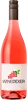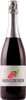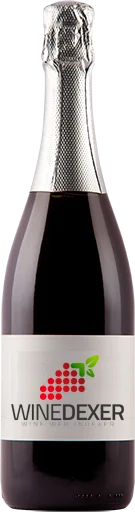
Winery LajverRosé Cuvée
 Sparkling wine



This wine generally goes well with

Details and technical informations about Winery Lajver's Rosé Cuvée.
Discover the grape variety: Findling
Aromatic, supple whites with a pale golden robe, an ample palate with moderate acidity, and signature muscat aromas of white flowers (elderflower), yellow fruits (peach) and riper notes than its parent Müller-Thurgau. Accessible and fruity profile. Grown on a few hectares in Rhineland-Palatinate for local cuvées. A mutation of Müller-Thurgau obtained in 1934 in Germany, with smaller bunches and earlier ripening.
Last vintages of this wine
The best vintages of Rosé Cuvée from Winery Lajver are 2017, 2016, 0, 2014 and 2015.
Informations about the Winery Lajver
The Winery Lajver is one of of the world's greatest estates. It offers 35 wines for sale in the of Szekszárd to come and discover on site or to buy online.

The wine region of Szekszárd
Southern Hungarian region, land of velvety, spicy reds. Signature Szekszardi Bikaver (local "Bull's Blood"): a blend of dominant Kekfrankos (Blaufrankisch) and native Kadarka, with signature notes of ripe cherry, plum, paprika, hibiscus, tobacco and sweet spice, velvety tannins and southern roundness — softer and sunnier than Eger's. Also peppery Cabernet Franc and dense Cabernet Sauvignon. Mild Pannonian climate, loess soils over limestone.
The wine region of Dél-Pannónia
Southern Hungary (Pécs, Szekszárd, Villány, Tolna), ~7,800 ha on loess and limestone, continental climate with Mediterranean influences — bastion of great Hungarian reds. Kékfrankos and Kadarka signatures as native red kings: spiced and structured with black cherry, blackberry, plum, paprika, pepper and smoky hint, firm tannins. Ripe Cabernet Franc and Sauvignon in Bordeaux blends at Villány. Specialities Szekszárdi Bikavér and unique Cirfandli white at Pécs (spiced, honeyed).
The word of the wine: Aging
Period during which a wine is kept in a cellar where it goes through different phases of evolution of its aromatic range and a maturation of its constituents (evolution of the colour, refining of the tannins, harmonization of the different flavours, etc.). The wine evolves better and less quickly in large containers, whereas it deteriorates prematurely in half-bottles.