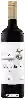
Winery LacrimusGarnacha
 Red wine



In the mouth this red wine is a powerful with a nice balance between acidity and tannins.
This wine generally goes well with poultry, beef or veal.
Taste structure of the Garnacha from the Winery Lacrimus
Light | Bold | |
Smooth | Tannic | |
Dry | Sweet | |
Soft | Acidic |
In the mouth the Garnacha of Winery Lacrimus in the region of Rioja is a powerful with a nice balance between acidity and tannins.
Food and wine pairings with Garnacha
Pairings that work perfectly with Garnacha



Original food and wine pairings with Garnacha

The Garnacha of Winery Lacrimus matches generally quite well with dishes of beef, lamb or veal such as recipes of cicadas at the chib, trapper's barbecue or veal paupiettes with cider.
Details and technical informations about Winery Lacrimus's Garnacha.
Discover the grape variety: Grassen
Grassen noir is a grape variety that originated in France (Provence). It produces a variety of grape specially used for wine making. It is rare to find this grape to eat on our tables. Grassen noir can be found grown in these vineyards: South West, Cognac, Bordeaux, Provence & Corsica, Rhone Valley.
Last vintages of this wine
The best vintages of Garnacha from Winery Lacrimus are 0
Informations about the Winery Lacrimus
The Winery Lacrimus is one of of the world's greatest estates. It offers 12 wines for sale in the of Rioja to come and discover on site or to buy online.

The wine region of Rioja
Rioja, in northern Spain, is best known for its berry-flavored, barrel-aged red wines made from Tempranillo and Garnacha. It is probably the leading wine region in Spain. It is certainly the most famous, rivaling only Jerez. The Vineyards follow the course of the Ebro for a hundred kilometres between the towns of Haro and Alfaro.
The word of the wine: Deposit
Solid particles that can naturally coat the bottom of a bottle of wine. It is rather a guarantee that the wine has not been mistreated: in fact, to avoid the natural deposit, rather violent processes of filtration or cold passage (- 7 or - 8 °C) are used in order to precipitate the tartar (the small white crystals that some people confuse with crystallized sugar: just taste to dissuade you from it)