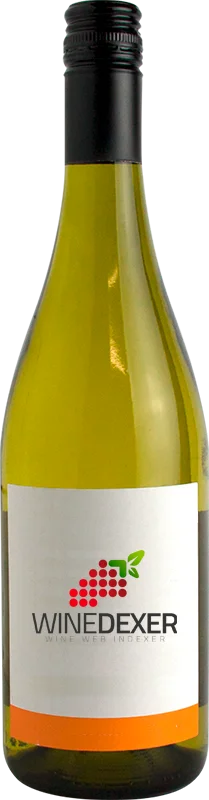
Winery KastellChardonnay Secco Trocken
 White wine


In the mouth this white wine is a with a nice freshness.
This wine generally goes well with pork, vegetarian or poultry.

Taste structure of the Chardonnay Secco Trocken from the Winery Kastell
Light | Bold | |
Dry | Sweet | |
Soft | Acidic |
In the mouth the Chardonnay Secco Trocken of Winery Kastell in the region of Nahe is a with a nice freshness.
Food and wine pairings with Chardonnay Secco Trocken
Pairings that work perfectly with Chardonnay Secco Trocken



Original food and wine pairings with Chardonnay Secco Trocken

The Chardonnay Secco Trocken of Winery Kastell matches generally quite well with dishes of pork, rich fish (salmon, tuna etc) or vegetarian such as recipes of stuffed tomatoes, sea bass wrapped in salt crust or nanie's diced ham quiche.
Details and technical informations about Winery Kastell's Chardonnay Secco Trocken.
Discover the grape variety: Chardonnay
Whites with many faces: mineral and taut at Chablis (lemon, green apple, flint), opulent and buttery at Meursault and Puligny-Montrachet (hazelnut, brioche, yellow fruits), tense and chalky in Champagne (Blanc de Blancs). Also vinified sparkling and widely exported (Sonoma, Margaret River, Casablanca). A Burgundian variety, a cross of Pinot Noir × Gouais Blanc, half-sibling of Aligoté.
Last vintages of this wine
The best vintages of Chardonnay Secco Trocken from Winery Kastell are 0
Informations about the Winery Kastell
The Winery Kastell is one of of the world's greatest estates. It offers 30 wines for sale in the of Nahe to come and discover on site or to buy online.

The wine region of Nahe
Homeland of a mineral Riesling of exceptional geological expression: lively, precise whites with notes of peach, citrus, green apple, gunflint and fine salinity, from taut dry to botrytised sweet. 75% whites, Riesling king (27%) complemented by round Pinot Gris and supple Pinot Blanc. Rising reds: silky Spätburgunder with red fruit, darker Dornfelder. 4,240 ha along the Nahe river, among the most diverse soils in Germany (180 formations).
The word of the wine: Flavours
There are generally four so-called fundamental flavours: acidity, bitterness, sweetness and saltiness. The first three are considered to be the building blocks of the structure of wines. They are perceived by the taste buds that cover the surface of the tongue.