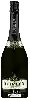
Winery HungariaGrande Cuvée Rosé
 Sparkling wine



This wine generally goes well with

Details and technical informations about Winery Hungaria's Grande Cuvée Rosé.
Discover the grape variety: Roussin
Light and fruity reds with a light ruby colour, melted tannins and a light palate, offering discreet signature aromas of red fruits (cherry, strawberry) and floral notes. A confidential heritage profile. Now almost extinct, preserved in a few INRAE ampelographic collections, it bears witness to the varietal diversity of the old French vineyard. Rare French black variety, once grown in the Loire Valley and Burgundy.
Last vintages of this wine
The best vintages of Grande Cuvée Rosé from Winery Hungaria are 0
Informations about the Winery Hungaria
The Winery Hungaria is one of of the world's great estates. It offers 16 wines for sale in the of Etyek-Buda to come and discover on site or to buy online.

The wine region of Etyek-Buda
Hungarian wine region near Budapest, fresh continental winds bringing lively acidity — one of Hungary's great homes of sparkling wine (traditional method, min. 24 months ageing). Refined signature sparkling whites with signature notes of white apple, citrus, white flowers, brioche and an almond touch, fine bubbles and taut palate — Chardonnay is the benchmark, Pinot Noir adds body. Still: lively Sauvignon, floral Királyleányka, straight Pinot Blanc.
The wine region of Észak-Dunántúl
Northern Transdanubia wine region (northern Hungary) grouping Etyek-Buda, Neszmély, Mór and Pannonhalma, with limestone and volcanic soils at Mór. Nearly exclusively white wines: Olaszrizling (Welschriesling) ample with apple, citrus, almond and honeyed touch. Opulent Chardonnay, lively Sauvignon Blanc, floral Tramini and fragrant Muscat Ottonel. Ezerjó generous on volcanic soils.
The word of the wine: White winemaking
White wines are obtained by fermentation of the juice after pressing. A pre-fermentation maceration is sometimes practiced to extract the aromatic substances from the skins. White wines are normally made from white grapes, but can also be made from red grapes (blanc de noirs). The grapes are then pressed as soon as they arrive at the vat house without maceration in order to prevent the colouring matter contained in the skins from "staining" the wine.