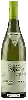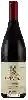
Winery Hugues de VernesChâteauneuf-du-Pape
 Red wine
This wine generally goes well with beef, game (deer, venison) or lamb.
Food and wine pairings with Châteauneuf-du-Pape
Pairings that work perfectly with Châteauneuf-du-Pape



Original food and wine pairings with Châteauneuf-du-Pape
The Châteauneuf-du-Pape of Winery Hugues de Vernes matches generally quite well with dishes of lamb, pork or poultry such as recipes of lamb tagine with broad beans, stuffed mushrooms or bami.
Details and technical informations about Winery Hugues de Vernes's Châteauneuf-du-Pape.
Discover the grape variety: Folignan
Folignan blanc is a grape variety that originated in France (Languedoc). It produces a variety of grape specially used for wine making. It is rare to find this grape to eat on our tables. It should be noted that this variety can also be used for the elaboration of eaux de vie. Folignan blanc can be found cultivated in the following vineyards: South-West, Cognac, Bordeaux, Provence & Corsica, Rhone Valley.
Informations about the Winery Hugues de Vernes
The Winery Hugues de Vernes is one of of the world's greatest estates. It offers 8 wines for sale in the of Rhône méridional to come and discover on site or to buy online.

The wine region of Rhône méridional
Côtes du Rhône is a regional appellation in the Rhône Valley in eastern France. It applies to red, rosé and white wines, and includes more than 170 villages. The area follows the course of the Rhône southward for 125 miles (200 km) from Saint-Cyr-sur-le-Rhône to Avignon. A small portion of the wines in the appellation are white wines.
The wine region of Rhone Valley
The Rhone Valley is a key wine-producing region in Southeastern France. It follows the North-south course of the Rhône for nearly 240 km, from Lyon to the Rhône delta (Bouches-du-Rhône), near the Mediterranean coast. The Length of the valley means that Rhône wines are the product of a wide variety of soil types and mesoclimates. The viticultural areas of the region cover such a distance that there is a widely accepted division between its northern and southern parts.
The word of the wine: Roast (taste of)
Characteristic taste of wines made from grapes affected by botrytis cinerea.