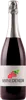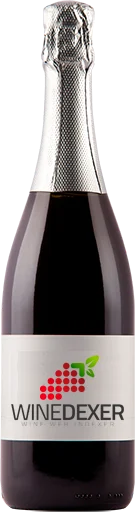
Winery Hervé MathelinRozemarijn Brut Premiere
 Sparkling wine
This wine generally goes well with pork, rich fish (salmon, tuna etc) or shellfish.
Food and wine pairings with Rozemarijn Brut Premiere
Pairings that work perfectly with Rozemarijn Brut Premiere



Original food and wine pairings with Rozemarijn Brut Premiere

The Rozemarijn Brut Premiere of Winery Hervé Mathelin matches generally quite well with dishes of pork, rich fish (salmon, tuna etc) or shellfish such as recipes of lentils and morteau sausages, irish tartiflette or lobster and scallops on a bed of leeks.
Details and technical informations about Winery Hervé Mathelin's Rozemarijn Brut Premiere.
Discover the grape variety: Gouget noir
This grape variety was cultivated in the Montluçonnaise region (Allier) since the origin of the vineyards in this region. For a long time it was confused with Gougean de l'Allier, but genetic analyses show that it comes from a mutation of Gouais blanc, also called Gouget blanc. Gouget noir is practically on the verge of extinction, although it is listed in the Official Catalogue of Wine Grape Varieties, list A1. It was therefore very well known in the wine-growing centre of France but totally absent from other French regions and abroad.
Informations about the Winery Hervé Mathelin
The Winery Hervé Mathelin is one of of the world's greatest estates. It offers 9 wines for sale in the of Champagne to come and discover on site or to buy online.

The wine region of Champagne
Champagne is the name of the world's most famous Sparkling wine, the appellation under which it is sold and the French wine region from which it comes. Although it has been used to refer to sparkling wines around the world - a point of controversy and legal wrangling in recent decades - Champagne is a legally controlled and restricted name. See the labels of Champagne wines. The fame and success of Champagne is, of course, the product of many Complex factors.
The word of the wine: Performance
Quantity of grapes harvested per hectare. In AOC, the average yield is limited on the proposal of the appellation syndicate, validated by the Inao. The use of high-performance plant material (especially clones) and better control of vine diseases have increased yields. This is not without consequences on the quality of the wines (dilution) and on the state of the market (too much wine). We must not over-simplify: low yields are not synonymous with quality, and it is often in years with generous harvests that we find the greatest vintages (1982 and 1986 in Bordeaux, 1996 in Champagne, 1990 and 2005 in Burgundy...).