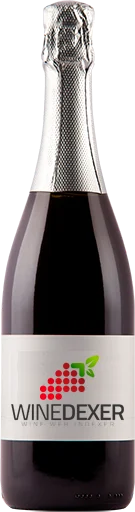
Winery Henry de VaugencyLouis Très Vieille Vigne Pas Dosé Brut Champagne Grand Cru
 Sparkling wine


In the mouth this sparkling wine is a powerful with a nice vivacity and a fine and pleasant bubble.
This wine generally goes well with pork, rich fish (salmon, tuna etc) or shellfish.
Taste structure of the Louis Très Vieille Vigne Pas Dosé Brut Champagne Grand Cru from the Winery Henry de Vaugency
Light | Bold | |
Soft | Acidic | |
Gentle | Fizzy |
In the mouth the Louis Très Vieille Vigne Pas Dosé Brut Champagne Grand Cru of Winery Henry de Vaugency in the region of Champagne is a powerful with a nice vivacity and a fine and pleasant bubble.
Wine flavors and olphactive analysis





On the nose the Louis Très Vieille Vigne Pas Dosé Brut Champagne Grand Cru of Winery Henry de Vaugency in the region of Champagne often reveals types of flavors of peach, brioche or almonds and sometimes also flavors of non oak, earth or microbio.
Food and wine pairings with Louis Très Vieille Vigne Pas Dosé Brut Champagne Grand Cru
Pairings that work perfectly with Louis Très Vieille Vigne Pas Dosé Brut Champagne Grand Cru



Original food and wine pairings with Louis Très Vieille Vigne Pas Dosé Brut Champagne Grand Cru

The Louis Très Vieille Vigne Pas Dosé Brut Champagne Grand Cru of Winery Henry de Vaugency matches generally quite well with dishes of pork, rich fish (salmon, tuna etc) or shellfish such as recipes of pork chops with curry and honey, bacalhau com natas or shrimp with cream and fettuccine.
Details and technical informations about Winery Henry de Vaugency's Louis Très Vieille Vigne Pas Dosé Brut Champagne Grand Cru.
Discover the grape variety: Caladoc
Caladoc noir is a grape variety that originated in France (Languedoc). It produces a variety of grape specially used for wine making. It is rare to find this grape to eat on our tables. This variety of grape is characterized by large bunches of grapes of medium size. Caladoc noir can be found in several vineyards: South-West, Cognac, Bordeaux, Languedoc & Roussillon, Provence & Corsica, Rhone Valley, Loire Valley, Savoie & Bugey, Beaujolais.
Informations about the Winery Henry de Vaugency
The Winery Henry de Vaugency is one of of the world's greatest estates. It offers 17 wines for sale in the of Champagne Grand Cru to come and discover on site or to buy online.

The wine region of Champagne Grand Cru
Champagne grand cru is a Sparkling white wine produced in the vineyards of the Champagne region of northeastern France and more specifically in the wine regions of the Montagne de Reims, the Vallée de la Marne, the Côte des Blancs, the Côte des Bar, the Côte de Sézanne and Vitry-le-François. Administratively, the Champagne grand cru can be produced in the departments of Marne, Aisne, Aube, Seine-et-Marne and Haute-Marne. Its vineyards benefit from a temperate-oceanic Climate with a continental influence and a Terroir made of limestone and marl soils. The Champagne Grand Cru wine can be made with the following main Grape varieties: Chardonnay B, Meunier N, Pinot N, Arbane B, Petit Meslier B, Pinot B.
The wine region of Champagne
Champagne is the name of the world's most famous Sparkling wine, the appellation under which it is sold and the French wine region from which it comes. Although it has been used to refer to sparkling wines around the world - a point of controversy and legal wrangling in recent decades - Champagne is a legally controlled and restricted name. See the labels of Champagne wines. The fame and success of Champagne is, of course, the product of many Complex factors.
The word of the wine: Burgundy melon
A white grape variety from Burgundy that is not widely used in its native region, but has spread to the Nantes region. It is the exclusive variety of Muscadet. It gives a dry pale yellow wine, supple and lively, with an intense bouquet, to which maturing on lees gives fatness and aromatic complexity.