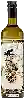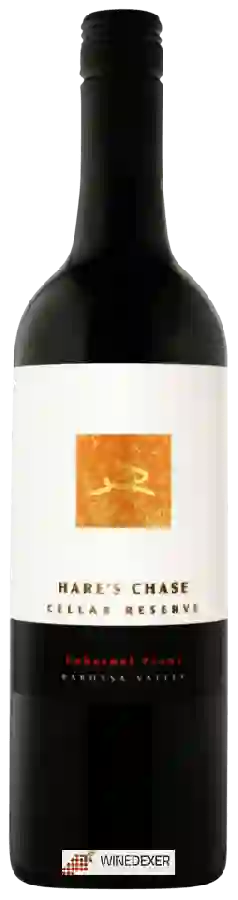
Winery Hares ChaseCellar Reserve Cabernet Franc
 wine
wine
This wine generally goes well with
The Cellar Reserve Cabernet Franc of the Winery Hares Chase is in the top 0 of wines of Barossa Valley.

Details and technical informations about Winery Hares Chase's Cellar Reserve Cabernet Franc.
Discover the grape variety: Villard noir
Colored, fruity reds with an intense ruby robe, smooth tannins and a supple palate, with simple aromas of red fruits (cherry, raspberry), soft spices and hybrid notes. Productive, disease-resistant profile for early drinking. Now marginal in France, surviving in a few heritage plots and varietal collections, important in post-phylloxera reconstruction. French black hybrid obtained by Bertille Seyve at Bourgoin-Jallieu (Seyve-Villard 18-315).
Informations about the Winery Hares Chase
The Winery Hares Chase is one of of the world's great estates. It offers 11 wines for sale in the of Barossa Valley to come and discover on site or to buy online.

The wine region of Barossa Valley
World icon of Australian Shiraz: powerful, silky, sun-drenched king red with notes of jammy blackberry, plum, dark chocolate, liquorice and a touch of sweet spice, enveloping tannins — Penfolds Grange and Henschke Hill of Grace as mythical bottles. Fleshy, spicy old-vine Grenache (up to 180 years), dense Mourvèdre, structured Cabernet as complement. GI northeast of Adelaide (~11,600 ha), hot dry climate, pre-phylloxera vines founded by Silesians in the 19th c.
The wine region of Australie du Sud
Cradle of the great Australian Shiraz: powerful, sun-drenched reds with notes of blackberry, candied plum, pepper, chocolate and eucalyptus, ample tannins and vibrant fruit (Barossa, McLaren Vale). Firm, minty Cabernet Sauvignon on Coonawarra (terra rossa). Dry, lemony Riesling from Clare and Eden Valley, straight and taut. Fresh Sauvignon and Chardonnay from Adelaide Hills.
The word of the wine: Tartar (deposit)
White, chalky deposits that occur as a result of precipitation inside bottles and are often considered by consumers as a defect. They are in fact tartaric salts formed by tartaric acid, potassium and calcium naturally present in the wine. This deposit does not alter the quality of the wine and can be eliminated by a simple decanting.