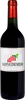
Winery GrandissimeLa Tour Larguis
 Red wine
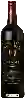
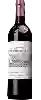
In the mouth this red wine is a powerful with a nice balance between acidity and tannins.
This wine generally goes well with poultry, beef or veal.
Taste structure of the La Tour Larguis from the Winery Grandissime
Light | Bold | |
Smooth | Tannic | |
Dry | Sweet | |
Soft | Acidic |
In the mouth the La Tour Larguis of Winery Grandissime in the region of Bordeaux is a powerful with a nice balance between acidity and tannins.
Food and wine pairings with La Tour Larguis
Pairings that work perfectly with La Tour Larguis



Original food and wine pairings with La Tour Larguis

The La Tour Larguis of Winery Grandissime matches generally quite well with dishes of beef, veal or game (deer, venison) such as recipes of monkfish tagine, tanjia or aiguillette of duck with honey.
Details and technical informations about Winery Grandissime's La Tour Larguis.
Discover the grape variety: Souvignier gris
Interspecific cross between Cabernet Sauvignon and Bronner obtained in 1983 by Norbert Becker in Freiburg (Germany). A resistance gene has been identified to oidium, no gene to mildew. It can be found in Germany, but also in Belgium, the Netherlands, Italy, ... and in France.
Informations about the Winery Grandissime
The Winery Grandissime is one of of the world's greatest estates. It offers 17 wines for sale in the of Bordeaux to come and discover on site or to buy online.

The wine region of Bordeaux
Bordeaux, in southwestern France, is one of the most famous, prestigious and prolific wine regions in the world. The majority of Bordeaux wines (nearly 90% of the production Volume) are the Dry, medium and Full-bodied red Bordeaux blends for which it is famous. The finest (and most expensive) are the wines of the great châteaux of Haut-Médoc and the right bank appellations of Saint-Émilion and Pomerol. The former focuses (at the highest level) on Cabernet Sauvignon, the latter on Merlot.
The word of the wine: Green harvest or green harvesting
The practice of removing excess bunches of grapes from certain vines, usually in July, but sometimes later. This is often necessary, but not always a good thing, as the remaining grapes tend to gain weight.