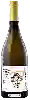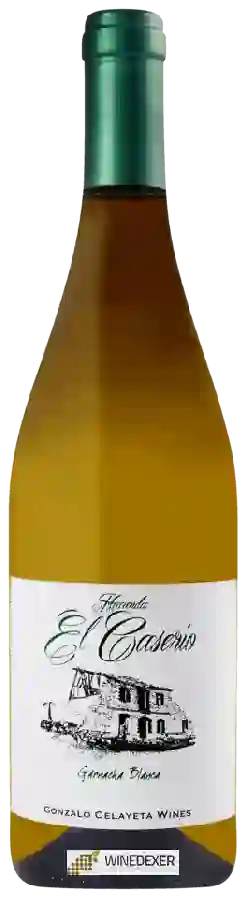
Winery Gonzalo CelayetaHacienda El Caserío Garnacha Blanca
 White wine


This wine generally goes well with
Details and technical informations about Winery Gonzalo Celayeta's Hacienda El Caserío Garnacha Blanca.
Discover the grape variety: Verdejo
An ancient grape variety that has been cultivated for a long time, mainly in the Rueda region of northwestern Spain. D.N.A. tests show that it is the result of a natural cross between Savagnin and Castellana Blanco. It should not be confused with the Verdelho, which is very well known in Portugal, and the Verdelho Branco, which is almost more widespread. The Verdejo is registered in the Official Catalogue of wine grape varieties list A. It can also be found in the United States (Virginia, California, etc.), Australia, Portugal, etc., but is practically unknown in France.
Last vintages of this wine
The best vintages of Hacienda El Caserío Garnacha Blanca from Winery Gonzalo Celayeta are 2013, 0
Informations about the Winery Gonzalo Celayeta
The Winery Gonzalo Celayeta is one of of the world's greatest estates. It offers 11 wines for sale in the of Navarre to come and discover on site or to buy online.

The wine region of Navarre
Navarra, in northern Spain, is one of the country's 17 first-level administrative regions (comunidades autónomas) and a fairly prolific, if lesser-known, wine region. Traditionally associated with the production of Bright, Fruity rosé, Navarra is beginning to attract attention for its high-quality red wines, mainly from the Tempranillo, Cabernet Sauvignon and Merlot grapes, after years of being overshadowed by its southern neighbor, Rioja. The first evidence of wine-making in the region dates back to Roman times, but it is almost certain that Vines were growing here Long before that. It was recently discovered that vines of the prehistoric species Vitis sylvestris - the predecessor of the beloved Vitis vinifera - were still growing in Navarre.
The word of the wine: Bâtonnage
A very old technique that has come back into fashion in modern oenology, which consists of shaking the white wine in the barrels at the end of fermentation, or after fermentation, with a stick or a flail, in order to suspend the fine lees composed of yeasts at the end of their activity. This process is sometimes used for red wines.