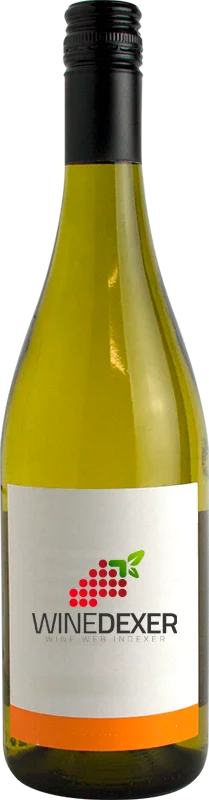
Winery Funck SchowalterNahe Select Feinherb Weissburgunder
 White wine
In the mouth this white wine is a with a nice freshness.
This wine generally goes well with rich fish (salmon, tuna etc), shellfish or mild and soft cheese.
Taste structure of the Nahe Select Feinherb Weissburgunder from the Winery Funck Schowalter
Light | Bold | |
Dry | Sweet | |
Soft | Acidic |
In the mouth the Nahe Select Feinherb Weissburgunder of Winery Funck Schowalter in the region of Nahe is a with a nice freshness.
Food and wine pairings with Nahe Select Feinherb Weissburgunder
Pairings that work perfectly with Nahe Select Feinherb Weissburgunder



Original food and wine pairings with Nahe Select Feinherb Weissburgunder

The Nahe Select Feinherb Weissburgunder of Winery Funck Schowalter matches generally quite well with dishes of rich fish (salmon, tuna etc), shellfish or mild and soft cheese such as recipes of grilled sea bass with herbs, paella for dummies (simple and delicious) or creve à fous (switzerland).
Details and technical informations about Winery Funck Schowalter's Nahe Select Feinherb Weissburgunder.
Discover the grape variety: Penouille
An ancient grape variety from the southwest of France that used to be found in the Bordeaux region and in the vineyards of Fronton (Haute Garonne). Today, it is in the process of disappearing.
Informations about the Winery Funck Schowalter
The Winery Funck Schowalter is one of of the world's greatest estates. It offers 22 wines for sale in the of Nahe to come and discover on site or to buy online.

The wine region of Nahe
Nahe is one of the smaller German wine regions, named after the Nahe river which joins the Rhein at Rheinhessen/bingen">Bingen. The viticultural carea here is characterised by dramatic topography with steep slopes and craggy outcrops of metamorphic rock. Like most of the regions on or near the Rhine, its most prestigious wines are made from Riesling. There are around 4,000 hectares (10,000 acres) of Vineyards, spread across seven Grosslagen (wine districts) and over 300 Einzellagen (individual vineyard sites).
The word of the wine: Density per hectare
Number of vines per hectare. For the same yield, a vine planted with 3,000 vines per hectare bears many more bunches (per vine) than a vine planted with 10,000. The grapes will therefore be less rich in sugar and polyphenols (tannins, aromas...).