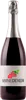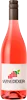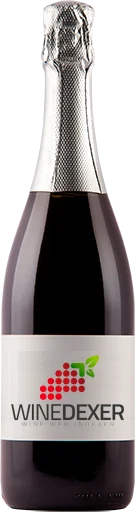
Winery FrankFerdinanda Brut Rosé
 Sparkling wine
In the mouth this sparkling wine is a with a nice vivacity and a fine and pleasant bubble.
This wine generally goes well with pork, rich fish (salmon, tuna etc) or shellfish.
Taste structure of the Ferdinanda Brut Rosé from the Winery Frank
Light | Bold | |
Soft | Acidic | |
Gentle | Fizzy |
In the mouth the Ferdinanda Brut Rosé of Winery Frank in the region of Sao Paulo is a with a nice vivacity and a fine and pleasant bubble.
Food and wine pairings with Ferdinanda Brut Rosé
Pairings that work perfectly with Ferdinanda Brut Rosé



Original food and wine pairings with Ferdinanda Brut Rosé
The Ferdinanda Brut Rosé of Winery Frank matches generally quite well with dishes of pork, rich fish (salmon, tuna etc) or shellfish such as recipes of banh mi sandwich, lasagne with two salmons or linguine with squid ink and cockles.
Details and technical informations about Winery Frank's Ferdinanda Brut Rosé.
Discover the grape variety: Dattier de Saint Vallier
Interspecific crossing obtained by Seyve-Villard between the 6468 Seibel and the Panse de Provence. This direct-producing hybrid is practically no longer multiplied, but can still be found among amateur gardeners or collectors.
Informations about the Winery Frank
The Winery Frank is one of of the world's great estates. It offers 12 wines for sale in the of Sao Paulo to come and discover on site or to buy online.

The wine region of Sao Paulo
Brazil is the largest country in South America and the fifth-largest in the world. It has a sizable wine industry, but is probably best known in global markets for spirits, and in particular Cachaça. With roughly 83,000 hectares (205,000 acres) of Vineyard">Vineyard, it ranks just behind its near-neighbors Argentina and Chile in terms of acreage under vine. Only a small proportion (about 10 percent) of these acres are planted with Vitis vinifera vines, however this large acreage does not translate into large volumes of quality wine.
The word of the wine: Finesse
Quality of a delicate and elegant wine.