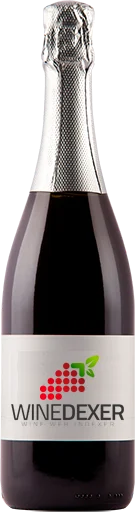
Winery François SecondéCoteaux Champaneois Grand Cru Sillery Rouge
 Sparkling wine


This wine generally goes well with
The Coteaux Champaneois Grand Cru Sillery Rouge of the Winery François Secondé is in the top 10 of wines of Coteaux Champenois.

Details and technical informations about Winery François Secondé's Coteaux Champaneois Grand Cru Sillery Rouge.
Discover the grape variety: Grüner Veltliner
Dry, vivid and structured whites with a pale golden robe, slender mouthfeel and preserved acidity, with signature aromas of white pepper, citrus (lemon, grapefruit), green apple, fresh vegetables (radish, rhubarb, watercress), herbs and loess mineral notes. Good ageing potential. Absolute star of Wachau DAC, Kamptal DAC, Kremstal DAC and Weinviertel DAC in Austria. The emblematic Austrian variety, the most planted in the country and a national identity signature.
Informations about the Winery François Secondé
The Winery François Secondé is one of of the world's greatest estates. It offers 12 wines for sale in the of Coteaux Champenois to come and discover on site or to buy online.

The wine region of Coteaux Champenois
Champagne AOC for still wines produced in the Champagne area, from the same grape varieties. Fine and taut flagship reds with signature notes of red cherry, wild strawberry, raspberry, flowers and chalky mineral touch, light tannins and lively palate — Pinot Noir signature at Bouzy and Ambonnay as reference (Bouzy red). Whites: taut Chardonnay (citrus, white flowers, chalk). Cool marginal climate for red.
The wine region of Champagne
World benchmark sparkling wines: fine bubbles, citrusy tension, notes of brioche, toasted almond, white flowers and white-fleshed fruits after ageing on lees. Three grapes blended or solo: fleshy Pinot Noir (38%), fruity Meunier (33%), chiselled Chardonnay (28%). From straight Blanc de Blancs to vinous Blanc de Noirs, from non-vintage Brut to age-worthy Millésimé. AOC since 1927, 34,300 ha on chalk, 17 Grands Crus and 44 Premiers Crus.
The word of the wine: Reassembly
During the vinification process, a "cap" is formed at the top of the vats with the solid parts (skin, pulp, pips, etc.), which contain tannins and colouring elements. Pumping over consists of emptying the vat from the bottom and pouring the juice back to the top, in order to mix the cap and the juice and to favour the exchange and the extraction. This old technique allows a better exchange between the solid parts and the liquid.