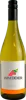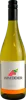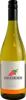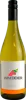
Domaine du BreuilPays Charentais Sauvignon
 White wine
This wine generally goes well with vegetarian, rich fish (salmon, tuna etc) or shellfish.
The Pays Charentais Sauvignon of the Domaine du Breuil is in the top 80 of wines of Pineau des Charentes.
Food and wine pairings with Pays Charentais Sauvignon
Pairings that work perfectly with Pays Charentais Sauvignon



Original food and wine pairings with Pays Charentais Sauvignon
The Pays Charentais Sauvignon of Domaine du Breuil matches generally quite well with dishes of rich fish (salmon, tuna etc), shellfish or vegetarian such as recipes of tunisian bricks, pasta with shrimp or tuna, pepper and tomato quiche.
Details and technical informations about Domaine du Breuil's Pays Charentais Sauvignon.
Discover the grape variety: Salagnin
Discovered in the 1870s by Mr. Robin, who lived in the Drôme at the time in Lapeyrouse-Mornay, this ancient grape variety is believed to have originated in the north of Isère. It can also be found in Switzerland. According to Thierry Lacombe (I.N.R.A./Montpellier), it is the result of a natural intraspecific crossing between Tressot Noir and Mondeuse Blanche. It should be noted in passing that, on the one hand, it has exactly the same parents as the mondeuse noire, that on the other hand, it is the mother of the diolinoir and, finally, is related to the servanin. Robin noir is not widely propagated today because it is not well known, although it is listed in the Official Catalogue of Wine Grape Varieties, list A1.
Informations about the Domaine du Breuil
The Domaine du Breuil is one of of the world's greatest estates. It offers 3 wines for sale in the of Pineau des Charentes to come and discover on site or to buy online.

The wine region of Pineau des Charentes
Pineau des Charentes is a Sweet and reasonably strong "Vin de Liqueur" from the Charente (Cognac) region of western France. It is made by adding Cognac brandy from the previous year's distillation (or earlier) to fresh Grape must from the current Vintage. By law, the must must be freshly harvested and, although it may have undergone partial Fermentation, its sugar content at the time of "Mutage" (when the brandy is added) must be greater than 170 g per litre. The Cognac itself must have an Alcohol content of at least 60 % and must have been kept in casks before being used.
The wine region of Cognac
Cognac is the most famous brandy in the world, more famous even than its OldGascon cousin, Armagnac. It comes from the Charentais, a vast region of western France immediately North of Bordeaux, and takes its name from the historic town of Cognac - the long-standing epicentre of local brandy production. In French, cognac is technically classified as an eau-de-vie de vin - a category that covers all spirits distilled from wine. The Full and official name of the brandy is actually "Eau-de-Vie de Cognac" or "Eau-de-Vie des Charentes", but the Short version has become so common that these longer versions almost never appear on labels.
The word of the wine: Flexible
A tender wine with little tannin.