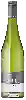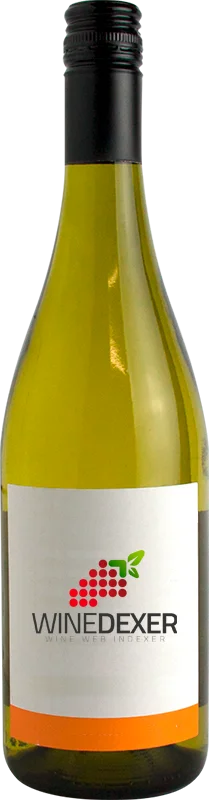
Winery WeberMonzinger Frühlingsplätzchen Grauburgunder S Trocken
 White wine



In the mouth this white wine is a .
This wine generally goes well with pork, cured meat or mushrooms.
Taste structure of the Monzinger Frühlingsplätzchen Grauburgunder S Trocken from the Winery Weber
Light | Bold | |
Dry | Sweet | |
Soft | Acidic |
In the mouth the Monzinger Frühlingsplätzchen Grauburgunder S Trocken of Winery Weber in the region of Nahe is a .
Food and wine pairings with Monzinger Frühlingsplätzchen Grauburgunder S Trocken
Pairings that work perfectly with Monzinger Frühlingsplätzchen Grauburgunder S Trocken


Original food and wine pairings with Monzinger Frühlingsplätzchen Grauburgunder S Trocken

The Monzinger Frühlingsplätzchen Grauburgunder S Trocken of Winery Weber matches generally quite well with dishes of pork, spicy food or mushrooms such as recipes of croque-monsieur, spanish paella or broth for chinese fondue.
Details and technical informations about Winery Weber's Monzinger Frühlingsplätzchen Grauburgunder S Trocken.
Discover the grape variety: Pineau d'Aunis
The wines produced in the Vendôme region are of excellent quality thanks to an exceptional grape variety: pineau d'aunis. For example, the red wines of the region, with their aromas of ripe red fruit and sweet spices, are a blend of Pineau d'Aunis, Cabernet Franc and Pinot Noir. The Vendôme hillsides are less than 200 km southwest of Paris. Pineau d'Aunis, a vigorous black grape variety, was first cultivated in the 9th century. It is characterized by a late budburst. Moreover, its foliage partially reddens in autumn. Although it is difficult to grow, Pineau d'Aunis is a high-yielding grape variety, producing between 40 and 80 hectolitres per hectare. It produces a wine with low alcohol content, supple, light-coloured and very aromatic. The "Pineau d'Aunis" grape variety is used as a single variety for the production of Coteaux du Vendômois. On the other hand, it is used in blends for Anjou, Rosé d'Anjou, Crémant de vallée de la Loire, Rosé de vallée de la Loire, Saumur, Saumur Champigny, Coteaux du Loir and Touraine. Finally, it is an accessory grape variety for Valençay.
Last vintages of this wine
The best vintages of Monzinger Frühlingsplätzchen Grauburgunder S Trocken from Winery Weber are 0
Informations about the Winery Weber
The Winery Weber is one of of the world's great estates. It offers 58 wines for sale in the of Nahe to come and discover on site or to buy online.

The wine region of Nahe
Nahe is one of the smaller German wine regions, named after the Nahe river which joins the Rhein at Rheinhessen/bingen">Bingen. The viticultural carea here is characterised by dramatic topography with steep slopes and craggy outcrops of metamorphic rock. Like most of the regions on or near the Rhine, its most prestigious wines are made from Riesling. There are around 4,000 hectares (10,000 acres) of Vineyards, spread across seven Grosslagen (wine districts) and over 300 Einzellagen (individual vineyard sites).
The word of the wine: Barrel
A wooden barrel made of oak that varies in size depending on the region and is used to age wines. Some white wines are vinified and aged in barrels.