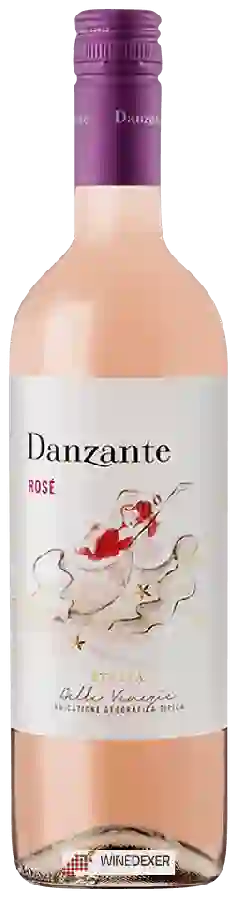
Winery DanzanteRosé
 Pink wine



This wine generally goes well with

Details and technical informations about Winery Danzante's Rosé.
Discover the grape variety: De Chaunac
Colourful, simple fruity reds with a deep purple robe, silky tannins and an airy palate with preserved acidity, showing aromas of red fruits and herbaceous notes. Cold- and disease-resistant. Grown mainly in Canada (Ontario, Quebec) and the north-eastern United States, adapting to rigorous continental viticultural climates. French black hybrid (Seibel 9549), named after Quebec researcher Adhémar de Chaunac.
Last vintages of this wine
The best vintages of Rosé from Winery Danzante are 2017, 0
Informations about the Winery Danzante
The Winery Danzante is one of of the world's greatest estates. It offers 12 wines for sale in the of delle Venezie to come and discover on site or to buy online.

The wine region of delle Venezie
Kingdom of Italian Pinot Grigio: lively, accessible whites with signature notes of green apple, pear, citrus and white flowers, fresh dry finish. Easy, juicy style, perfect as an aperitif. Covers Friuli-Venezia Giulia, Veneto and Trentino: ~85% of Italian Pinot Grigio production over 26,500 ha. Some more structured cuvées as Ramato (short maceration on pinkish skins).
The wine region of Veneto
World star of Prosecco: fresh, light Glera sparklers with notes of pear, green apple and white flowers, fruity, convivial bubbles. Veronese reds from Corvina and Rondinella: light, crisp Bardolino, fruity Valpolicella, opulent, concentrated Amarone DOCG (black cherry, chocolate, raisin) from dried grapes. Mineral, almondy Soave (Garganega) whites, fresh Pinot Grigio. 97,500 ha, Italy's largest production.
The word of the wine: Wrapped
Said of a wine rich in alcohol, but in which the mellowness dominates.