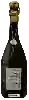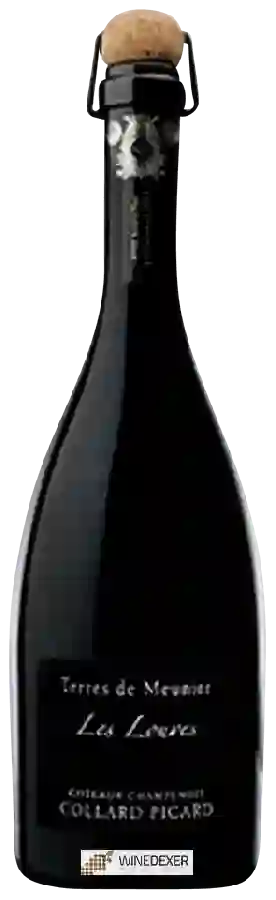
Winery Collard PicardLes Louves Terre de Meunier
 Red wine


This wine generally goes well with

Wine flavors and olphactive analysis


On the nose the Les Louves Terre de Meunier of Winery Collard Picard in the region of Champagne often reveals types of flavors of cherry, red fruit.
Details and technical informations about Winery Collard Picard's Les Louves Terre de Meunier.
Discover the grape variety: Siroka Melniska
Structured, intensely coloured reds with excellent ageing potential, with a deep purple colour, firm tannins and an ample palate, with signature aromas of black fruits (blackberry, plum), spices, tobacco and leather notes. Powerful Balkan profile. Star of the Melnik vineyard in the south-west of the country, it produces the best long-ageing reds of Bulgaria. Indigenous Bulgarian black variety grown in the sunny Melnik region.
Last vintages of this wine
The best vintages of Les Louves Terre de Meunier from Winery Collard Picard are 2014
Informations about the Winery Collard Picard
The Winery Collard Picard is one of of the world's greatest estates. It offers 13 wines for sale in the of Coteaux Champenois to come and discover on site or to buy online.

The wine region of Coteaux Champenois
Champagne AOC for still wines produced in the Champagne area, from the same grape varieties. Fine and taut flagship reds with signature notes of red cherry, wild strawberry, raspberry, flowers and chalky mineral touch, light tannins and lively palate — Pinot Noir signature at Bouzy and Ambonnay as reference (Bouzy red). Whites: taut Chardonnay (citrus, white flowers, chalk). Cool marginal climate for red.
The wine region of Champagne
World benchmark sparkling wines: fine bubbles, citrusy tension, notes of brioche, toasted almond, white flowers and white-fleshed fruits after ageing on lees. Three grapes blended or solo: fleshy Pinot Noir (38%), fruity Meunier (33%), chiselled Chardonnay (28%). From straight Blanc de Blancs to vinous Blanc de Noirs, from non-vintage Brut to age-worthy Millésimé. AOC since 1927, 34,300 ha on chalk, 17 Grands Crus and 44 Premiers Crus.
The word of the wine: Basic wine
Dry, still wine intended for the production of sparkling wines (champagne, crémants, etc.). The basic wines undergo a second fermentation in the bottle for the production of carbon dioxide, and therefore of bubbles.