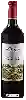
Winery Christeni VineyardsTo be Loved By You Cabernet Sauvignon
 wine
wine
This wine generally goes well with
The To be Loved By You Cabernet Sauvignon of the Winery Christeni Vineyards is in the top 0 of wines of Alexander Valley.

Details and technical informations about Winery Christeni Vineyards's To be Loved By You Cabernet Sauvignon.
Discover the grape variety: Oberlin noir
Colourful, simple reds with a deep purple robe, soft tannins and an airy palate, with black fruit aromas (blackcurrant, blackberry) and discreet herbal notes. Early-ripening and resistant. Grown mainly in Canada (Quebec, Ontario) and the north-eastern United States for rigorous continental climates. French black hybrid obtained in 1860 by Christian Oberlin in Colmar (gamay × millardet et grasset).
Informations about the Winery Christeni Vineyards
The Winery Christeni Vineyards is one of of the world's greatest estates. It offers 5 wines for sale in the of Alexander Valley to come and discover on site or to buy online.

The wine region of Alexander Valley
Sonoma's warmest AVA on gravelly soils: signature Cabernet Sauvignon as king (>50% of plantings) — powerful, elegant reds with ripe black fruits, dry herbs and tobacco, velvety tannins and fresh acidity, long ageing. Bordeaux blends with Merlot, Cabernet Franc, Petit Verdot and Malbec for structure and complexity. Also old-vine Zinfandel, balanced Merlot and Chardonnay. AVA recognised in 1984 in the Russian River valley, ripe tannic identity.
The wine region of California
Powerful, sunny reds: dense Napa Cabernet Sauvignon (blackcurrant, chocolate, tobacco, ample tannins), spicy, jammy Zinfandel from the Sierra Foothills, silky red-fruited Pinot Noir on the cool coast (Sonoma, Russian River, Central Coast). Opulent, buttery Chardonnay, notes of yellow fruit and vanilla. Varied climate, from the hot interior to the Pacific-cooled coast. 80% of US production, 139 AVAs including Napa (1st AVA, 1981).
The word of the wine: Chaptalization
The addition of sugar at the time of fermentation of the must, an ancient practice, but theorized by Jean-Antoine Chaptal at the dawn of the 19th century. The sugar is transformed into alcohol and allows the natural degree of the wine to be raised in a weak or cold year, or - more questionably - when the winegrower has a harvest that is too large to obtain good maturity.