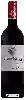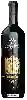
Château Haut BaradeCuvée Excellence
 Red wine


In the mouth this red wine is a powerful with a nice balance between acidity and tannins.
This wine generally goes well with poultry, beef or veal.
Taste structure of the Cuvée Excellence from the Château Haut Barade
Light | Bold | |
Smooth | Tannic | |
Dry | Sweet | |
Soft | Acidic |
In the mouth the Cuvée Excellence of Château Haut Barade in the region of Bordeaux is a powerful with a nice balance between acidity and tannins.
Food and wine pairings with Cuvée Excellence
Pairings that work perfectly with Cuvée Excellence



Original food and wine pairings with Cuvée Excellence

The Cuvée Excellence of Château Haut Barade matches generally quite well with dishes of beef, veal or game (deer, venison) such as recipes of thai beef skewers, tournedos rossini with port sauce or veal head with vinaigrette.
Details and technical informations about Château Haut Barade's Cuvée Excellence.
Discover the grape variety: Malvoisie de l' Istrie
This grape variety is endemic to the Istrian peninsula, which is partly located in Italy, Slovenia and Croatia, where it is the leading white grape variety. In France, it is almost unknown. It is related to malvasia bianca longa, also known as malvasia del Chianti.
Informations about the Château Haut Barade
The Château Haut Barade is one of of the world's greatest estates. It offers 5 wines for sale in the of Bordeaux to come and discover on site or to buy online.

The wine region of Bordeaux
Bordeaux, in southwestern France, is one of the most famous, prestigious and prolific wine regions in the world. The majority of Bordeaux wines (nearly 90% of the production Volume) are the Dry, medium and Full-bodied red Bordeaux blends for which it is famous. The finest (and most expensive) are the wines of the great châteaux of Haut-Médoc and the right bank appellations of Saint-Émilion and Pomerol. The former focuses (at the highest level) on Cabernet Sauvignon, the latter on Merlot.
The word of the wine: Maturing (champagne)
After riddling, the bottles are stored on "point", upside down, with the neck of one bottle in the bottom of the other. The duration of this maturation is very important: in contact with the dead yeasts, the wine takes on subtle aromas and gains in roundness and fatness. A brut without year must remain at least 15 months in the cellar after bottling, a vintage 36 months.