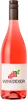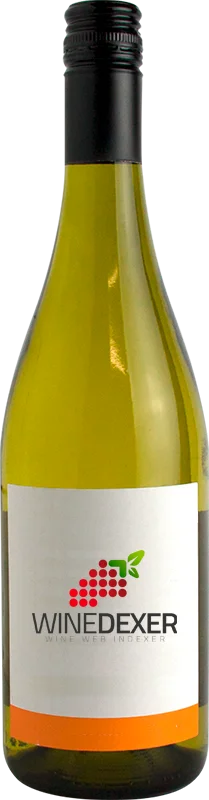
Château de l'HermitageBordeaux Blanc
 White wine
In the mouth this white wine is a powerful.
This wine generally goes well with pork, vegetarian or poultry.
Taste structure of the Bordeaux Blanc from the Château de l'Hermitage
Light | Bold | |
Dry | Sweet | |
Soft | Acidic |
In the mouth the Bordeaux Blanc of Château de l'Hermitage in the region of Bordeaux is a powerful.
Food and wine pairings with Bordeaux Blanc
Pairings that work perfectly with Bordeaux Blanc



Original food and wine pairings with Bordeaux Blanc


The Bordeaux Blanc of Château de l'Hermitage matches generally quite well with dishes of pork, vegetarian or poultry such as recipes of cassoulet of yesteryear, quiche with leeks and fresh salmon from flo or kefta.
Details and technical informations about Château de l'Hermitage's Bordeaux Blanc.
Discover the grape variety: Dornfelder
German, intraspecific cross made in 1955 by August Karl Herold (1902-1973) between the helfensteiner and the heroldrebe (more details, click here!). With these same parents he also obtained the hegel. The Dornfelder can be found in Switzerland, United Kingdom, Belgium, Germany, Austria, Czech Republic, Canada, United States, ... . Virtually unknown in France, we nevertheless recognize a certain interest in it due to its short phenological cycle and the quality of its wines, both rosé and red.
Informations about the Château de l'Hermitage
The Château de l'Hermitage is one of of the world's greatest estates. It offers 8 wines for sale in the of Bordeaux to come and discover on site or to buy online.

The wine region of Bordeaux
Bordeaux, in southwestern France, is one of the most famous, prestigious and prolific wine regions in the world. The majority of Bordeaux wines (nearly 90% of the production Volume) are the Dry, medium and Full-bodied red Bordeaux blends for which it is famous. The finest (and most expensive) are the wines of the great châteaux of Haut-Médoc and the right bank appellations of Saint-Émilion and Pomerol. The former focuses (at the highest level) on Cabernet Sauvignon, the latter on Merlot.
The word of the wine: Balance
Harmony of the different organoleptic elements of a wine. The balance is linked to the typicity of each wine. The sweetness of a sweet wine is an element of its balance, whereas a Sancerre or a Chablis will be asked to be lively and dry.