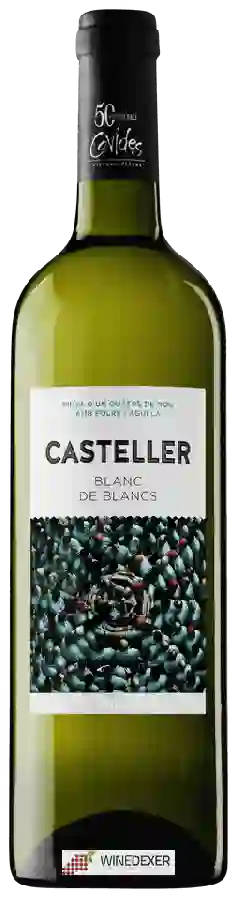
Winery CastellerBlanc de Blancs
 White wine


This wine generally goes well with

Details and technical informations about Winery Casteller's Blanc de Blancs.
Discover the grape variety: Verdanel
Simple, fresh dry whites with a pale golden robe, a supple palate and preserved acidity. Understated aromas of citrus, white flowers and herbaceous notes from the South-West. Rustic, airy profile, best drunk young. Preserved in INRAE variety collections, it bears witness to the pre-phylloxera ampelographic diversity of the South-West and is studied as a heritage grape. Rare French white grape, once cultivated in the South-West, now nearly extinct.
Last vintages of this wine
The best vintages of Blanc de Blancs from Winery Casteller are 2017, 0
Informations about the Winery Casteller
The Winery Casteller is one of of the world's great estates. It offers 14 wines for sale in the of Catalogne to come and discover on site or to buy online.

The wine region of Catalogne
Cradle of Cava (~95% of Spanish output, traditional method): Macabeo, Xarel-lo, Parellada trilogy, fine fruity bubble. Quality peak in Priorat DOCa: dense, mineral reds on llicorella (schist), old-vine Garnacha and Cariñena with black fruit, garrigue notes, firm tannins. Also Penedès, fleshy Montsant, sunny Empordà, Costers del Segre. Mediterranean.
The word of the wine: Length
Persistence in the mouth of a wine measured in caudalies.